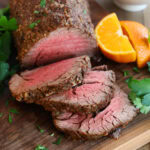
Perfect Roast Beef Tenderloin Recipe (Seared)
This impressive Oven Beef Tenderloin recipe is an easy holiday-worthy main course that's melt-in-your-mouth tender and juicy. Learn how to get restaurant-quality results that turn out perfectly every time.
Servings: 6 to 8
Calories: 114kcal
Ingredients
- 2¼ pounds beef tenderloin center cut roast
- 2 tablespoons Chinese Five Spice Powder
- 4 cloves garlic minced
- 5 tablespoons olive oil divided
- 2 tablespoons kosher salt
- Serve with Easy Cranberry Relish
Instructions
- For the beef: Remove tenderloin from the fridge 30 to 60 minutes before cooking to bring it close to room temperature. Heat oven to 450°F.
- Make a paste with the Chinese 5 Spice powder, garlic, and 3 tablespoons of olive oil and set aside.
- Rub salt all over tenderloin. Heat a large, non-stick, oven-proof sauté pan on medium-high heat, add the remaining 2 tablespoons of olive oil. Cook the tenderloin, turning until each side is a rich brown, 1 to 2 minutes per side.
- Using tongs and a brush or gloved hand, rub/brush the reserved spice and garlic paste all over the seared tenderloin. Return to oven-proof pan if you removed it.
- Transfer the entire pan to the oven and roast for 15 minutes for medium-rare, internal temperature should be 120°F to 125°F on a meat thermometer. When tenderloin is done remove it to a cutting board and tent with foil. Let it rest for 15 minutes.
- For the cranberry relish: Prepare in advance or while the roast rests after cooking. Serve with the sliced tenderloin.
Notes
Nutritional facts for roast only, not including Cranberry Relish.
🔸Bring the meat to room temperature: Before cooking, take your tenderloin out of the refrigerator and let it sit at room temperature for 30 to 60 minutes.
🔸Use a meat thermometer: Overcooked tenderloin becomes tough and rubbery. Internal temperature is far more important than time in the oven, so don't rely on the clock alone. Use an oven-safe probe thermometer and check my temperature guide above for more tips.
🔸Pat dry and season well: Use paper towels to dry the outside of the roast before getting started, then rub it generously with salt just before searing. Once the spice rub is applied, you'll have all the flavor you'll need.
🔸Don't skip the rest: Once the roast comes out of the oven, tent it loosely with foil and let it rest for at least 15 to 20 minutes before slicing so the juices have enough time to redistribute throughout the meat.
Nutrition
Calories: 114kcal | Carbohydrates: 2g | Protein: 1g | Fat: 12g | Saturated Fat: 2g | Polyunsaturated Fat: 1g | Monounsaturated Fat: 9g | Sodium: 2326mg | Potassium: 42mg | Fiber: 0.4g | Sugar: 0.02g | Vitamin A: 7IU | Vitamin C: 1mg | Calcium: 20mg | Iron: 1mg
