
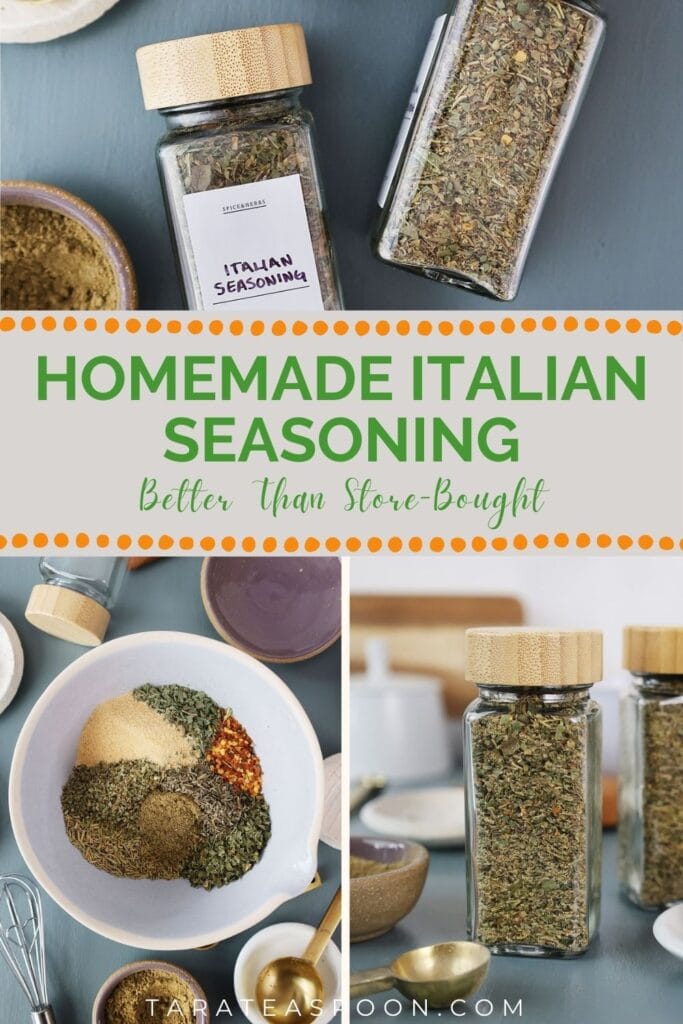
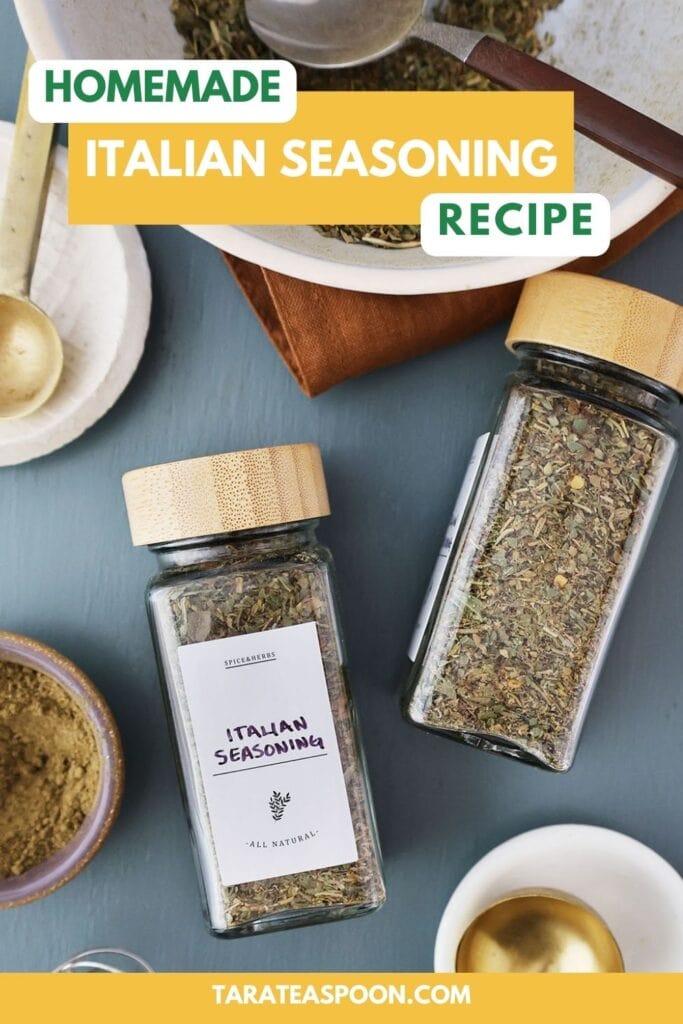
Make Homemade Italian Seasoning in minutes to use with pizza, pasta, salad dressings, and more! With a handful of dried spices, it's easy to make and customize a big batch to add a burst of Italian flavor to your favorite recipes.
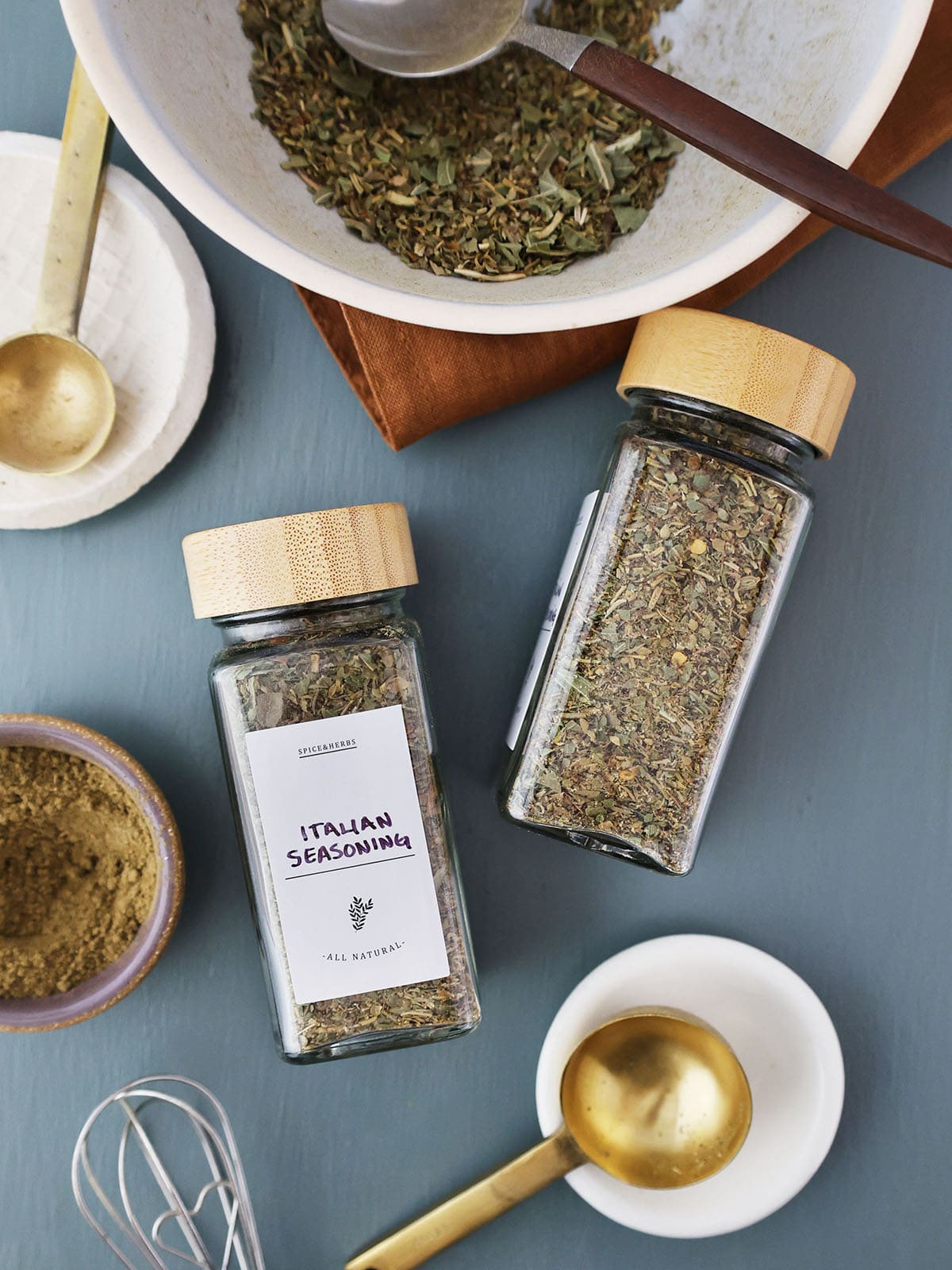
In this article you'll learn:
- How to use common dried herbs like oregano, basil, and thyme to create a high-quality homemade Italian seasoning blend with pantry staples.
- Tips for adjusting heat and flavor, including when to use marjoram or red pepper flakes.
- The best way to store homemade seasoning in glass jars to maintain good flavor for up to 6 months.
- Why you should skip the salt in your spice mixes and how to achieve finer texture using a spice grinder.
Generated with AI and experts from the Tara Teaspoon team.
Layers of bold spices and herby flavors are a hallmark of Italian and Italian-American recipes. In the not-so-distant past, achieving depth of Italian flavor in dishes like Beef and Ricotta Stuffed Shells or Alfredo Veggie Stromboli, required opening and measuring from half a dozen individual spice jars; a tedious process to be sure.
What is Italian seasoning?
To make Italian cuisine more accessible, chefs began creating time-saving blends of savory Mediterranean herbs, including dried oregano, basil, thyme, and rosemary, that could be stored together in one jar. Dried Italian seasoning was born.
Today, I’m showing you how to skip the grocery store aisle, and mix your own vibrant, custom blend in under 5 minutes.
You’ll never buy store-bought again
While store-bought mixes are convenient, they often sit on shelves for months, losing their punch. This homemade Italian seasoning is my personal favorite for a Mediterranean herb mix because it’s more vibrant and customizable than anything you’ll find in a plastic shaker. You can control both flavor and freshness.
Here's why it's a pantry essential:
- Vibrant flavor: By using high-quality dried herbs and adding a touch of garlic and red pepper, you get a much bolder profile than pre-mixed versions.
- Total control: This blend is salt-free, gluten-free, keto and paleo friendly, and contains no fillers or anti-caking agents, just pure herbal goodness.
- Ultra-convenient: It’s a true 'all-in-one' solution for soups, pizza, marinades, dressings, and so much more. Having this ready to go makes meal prep significantly faster.
- Budget-friendly spice blend: You likely already have these staples in your spice cabinet. Mixing your own is a cost-effective way to level up your cooking without a trip to the store.
Jump to:
Ingredients
DIY Italian seasoning has never been easier. Here's some tips about the ingredients to help you get started. See recipe card for full list of ingredients and quantities.
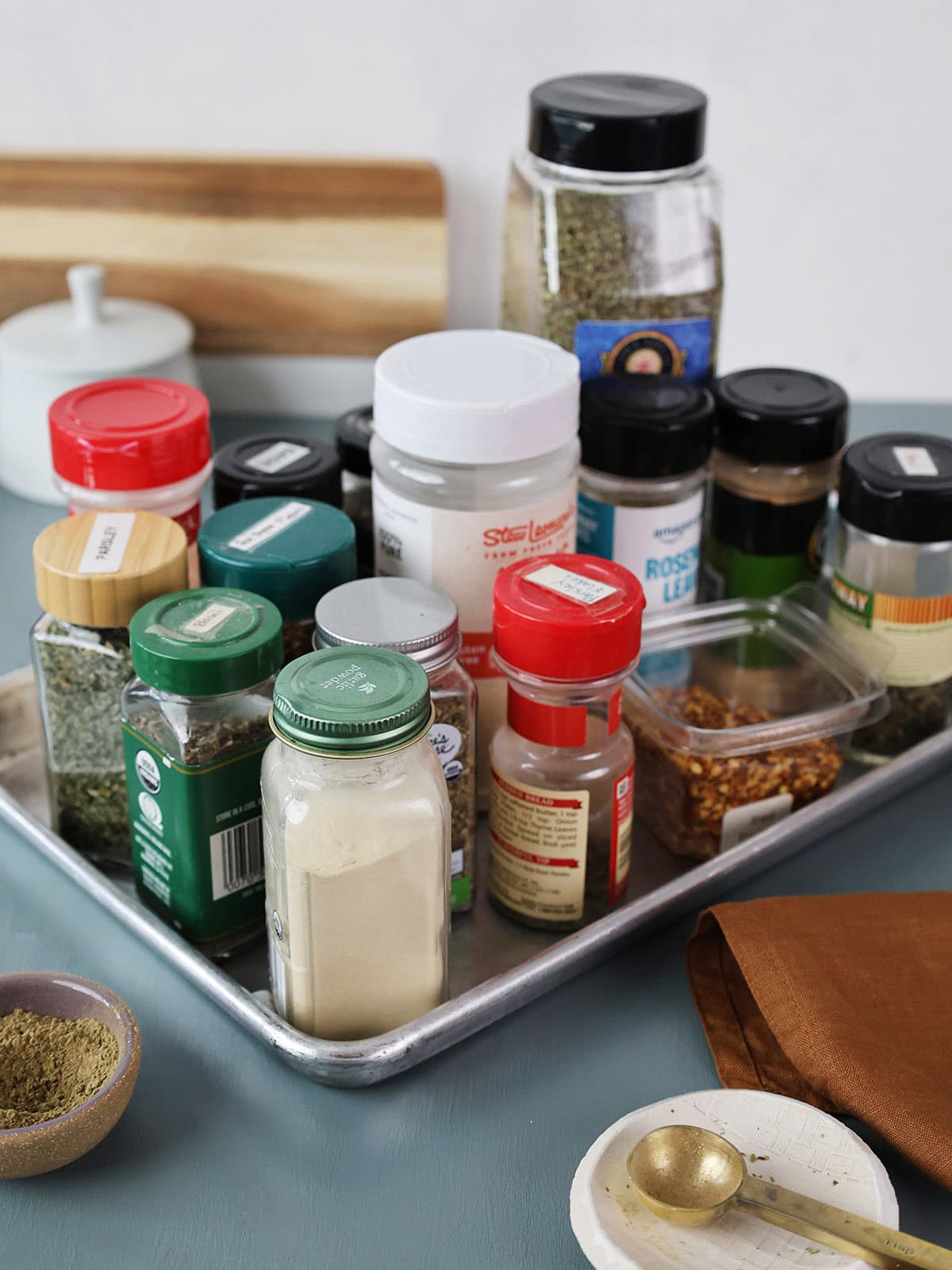
- Dried oregano: Look for Greek or Italian oregano for their savory, earthy flavors. Mexican oregano is a great substitute, as it has a lemony, vibrant taste.
- Dried basil: I prefer regular, dried basil as opposed to a freeze-dried version because more flavor is retained.
- Dried parsley: I like to use regular, dried parsley as opposed to a freeze-dried version because more flavor is retained.
- Dried thyme: English and French thyme are the most commonly found dried varieties and both work well.
- Dried rosemary: Slightly crush the dried rosemary between your fingers or with a mortar and pestle to release the oils.
- Dried marjoram: If you don't have or can't find this herb, replace it with extra oregano.
- Dried ground sage: I like to use rubbed, dried sage, but if you only find the dried, crushed leaves they will work too, and just impart a stronger flavor.
- Red pepper flakes: Adds subtle heat to the spice blend. If you are sensitive to pepper, leave it out.
- Garlic powder: In an absolute bind, you could substitute onion powder for the garlic powder.
How to make homemade Italian seasoning
Let's make this Italian herb mix together. Just follow these easy step-by-step instructions. See recipe card for comprehensive directions.
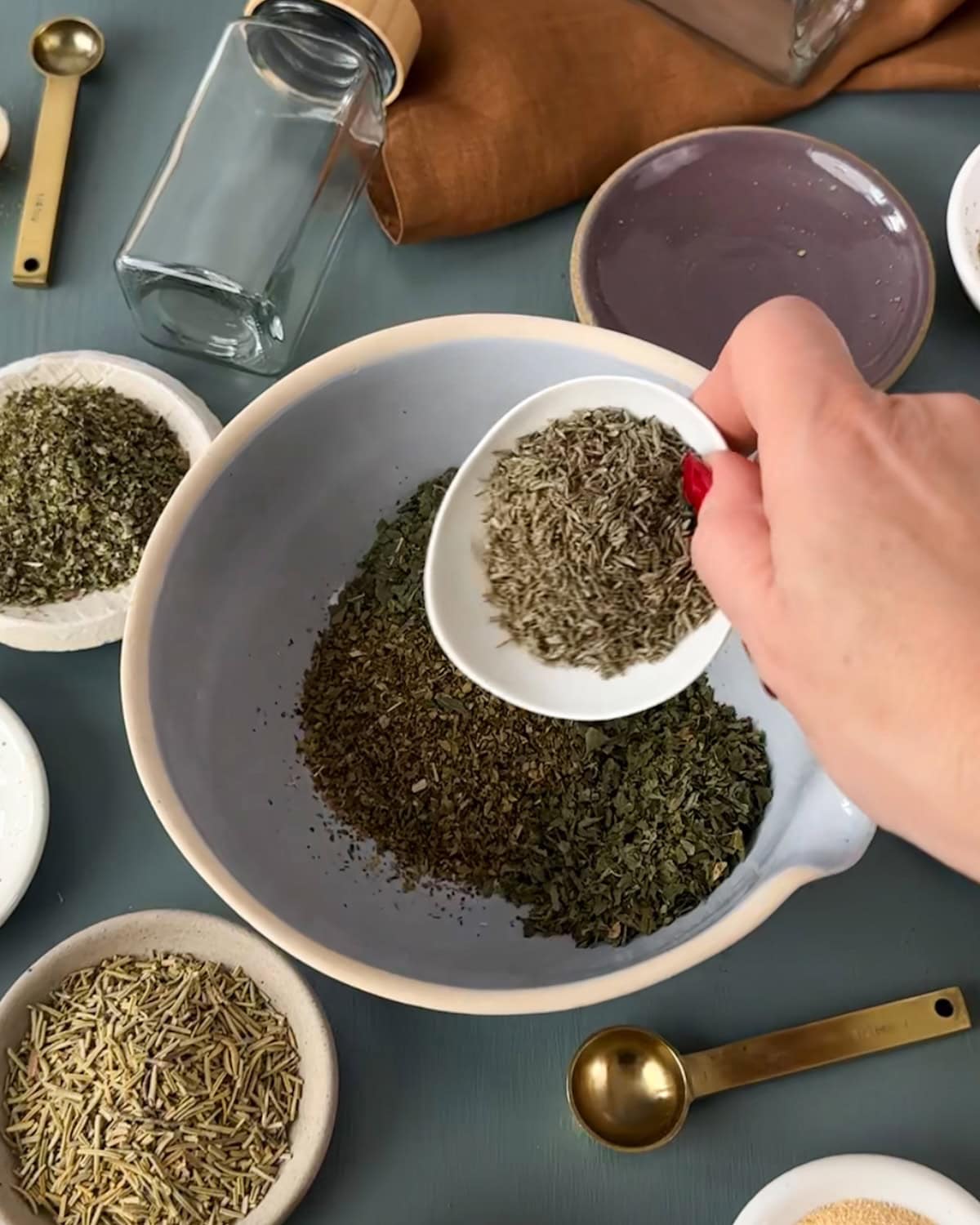
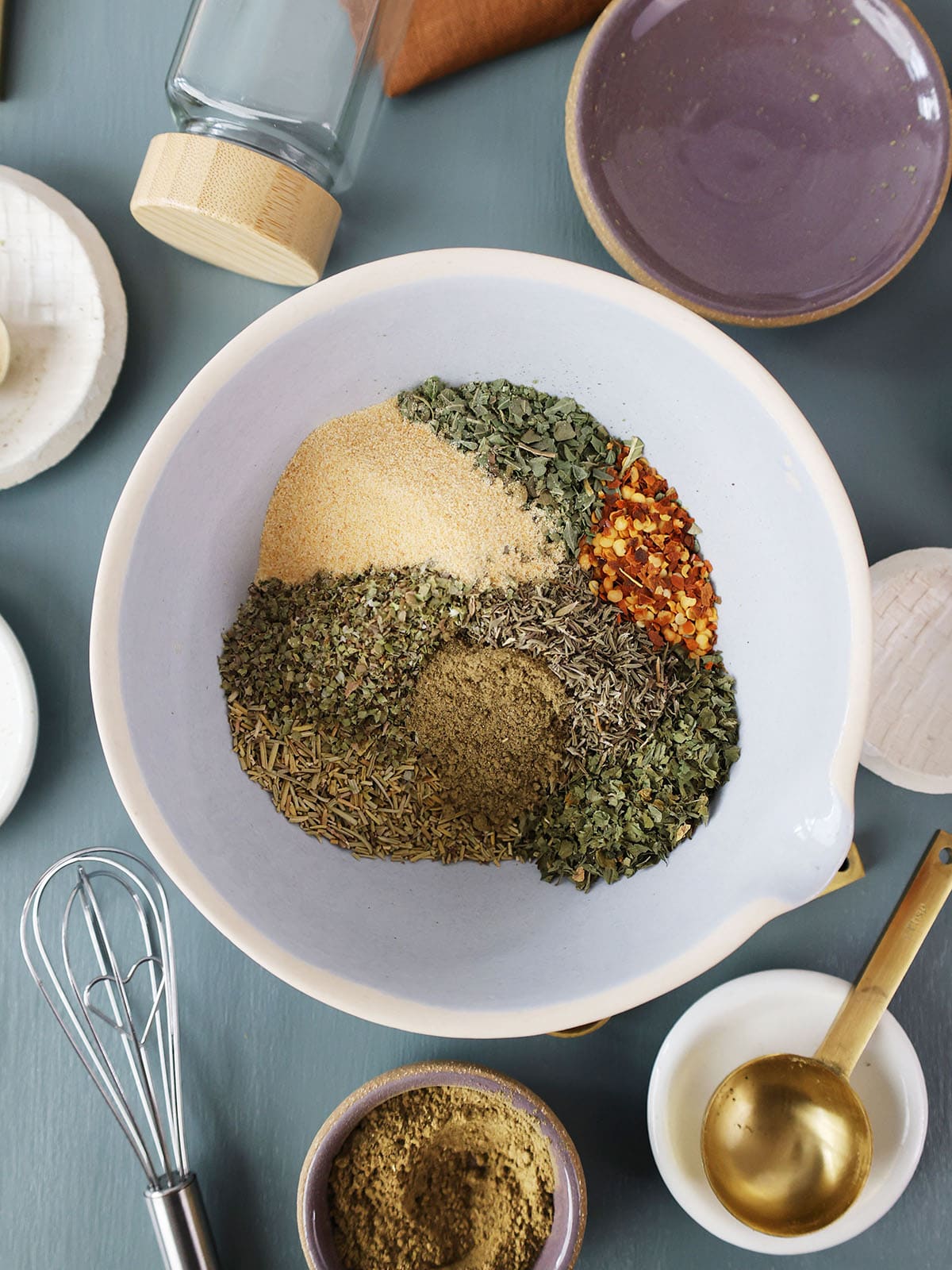
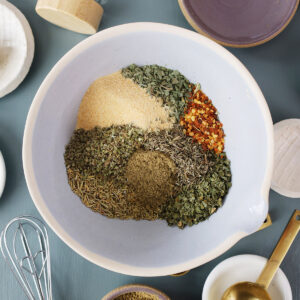
- Step 1: Measure and add dried herbs to a bowl.
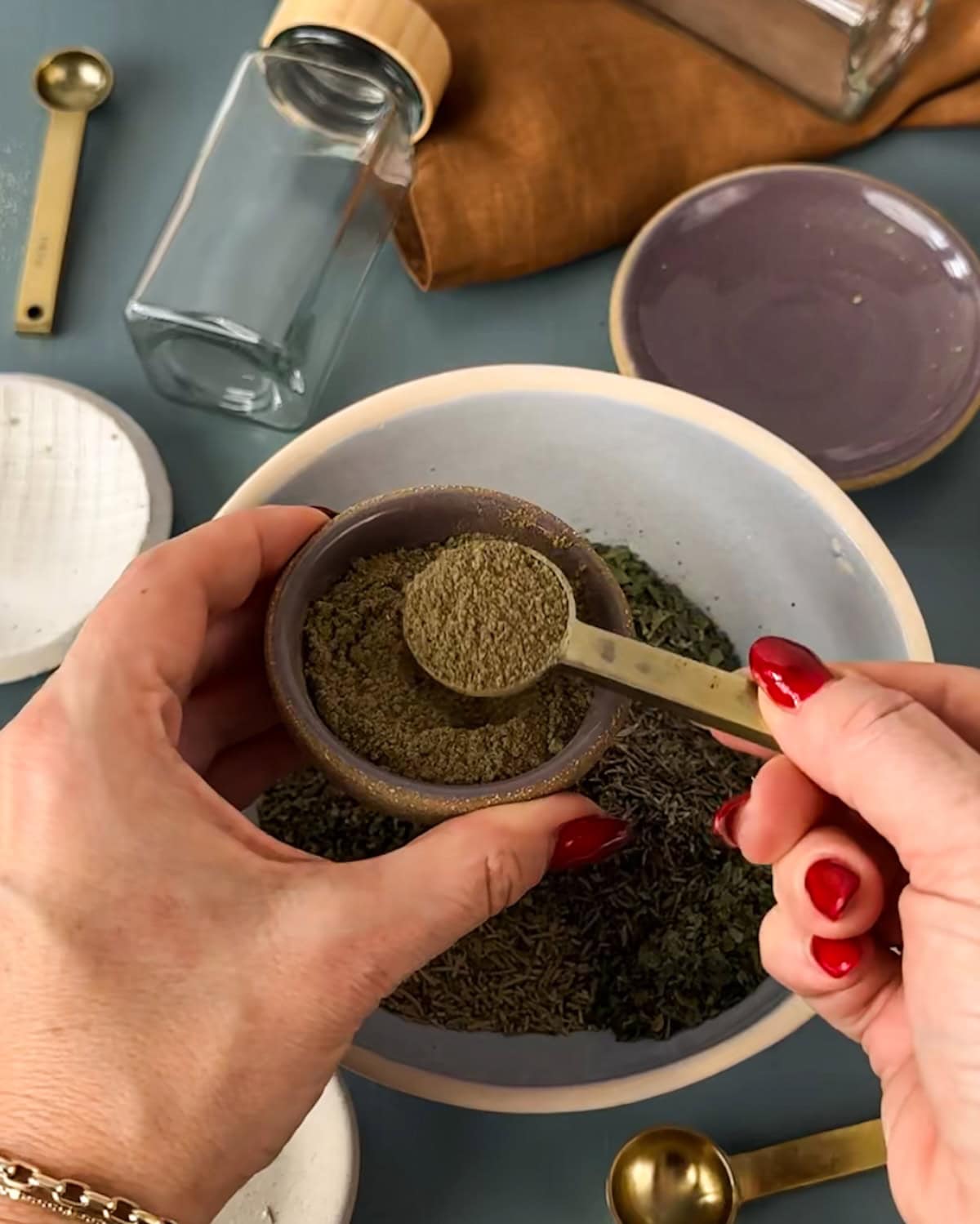
- Step 2: Measure and add spices to the bowl.
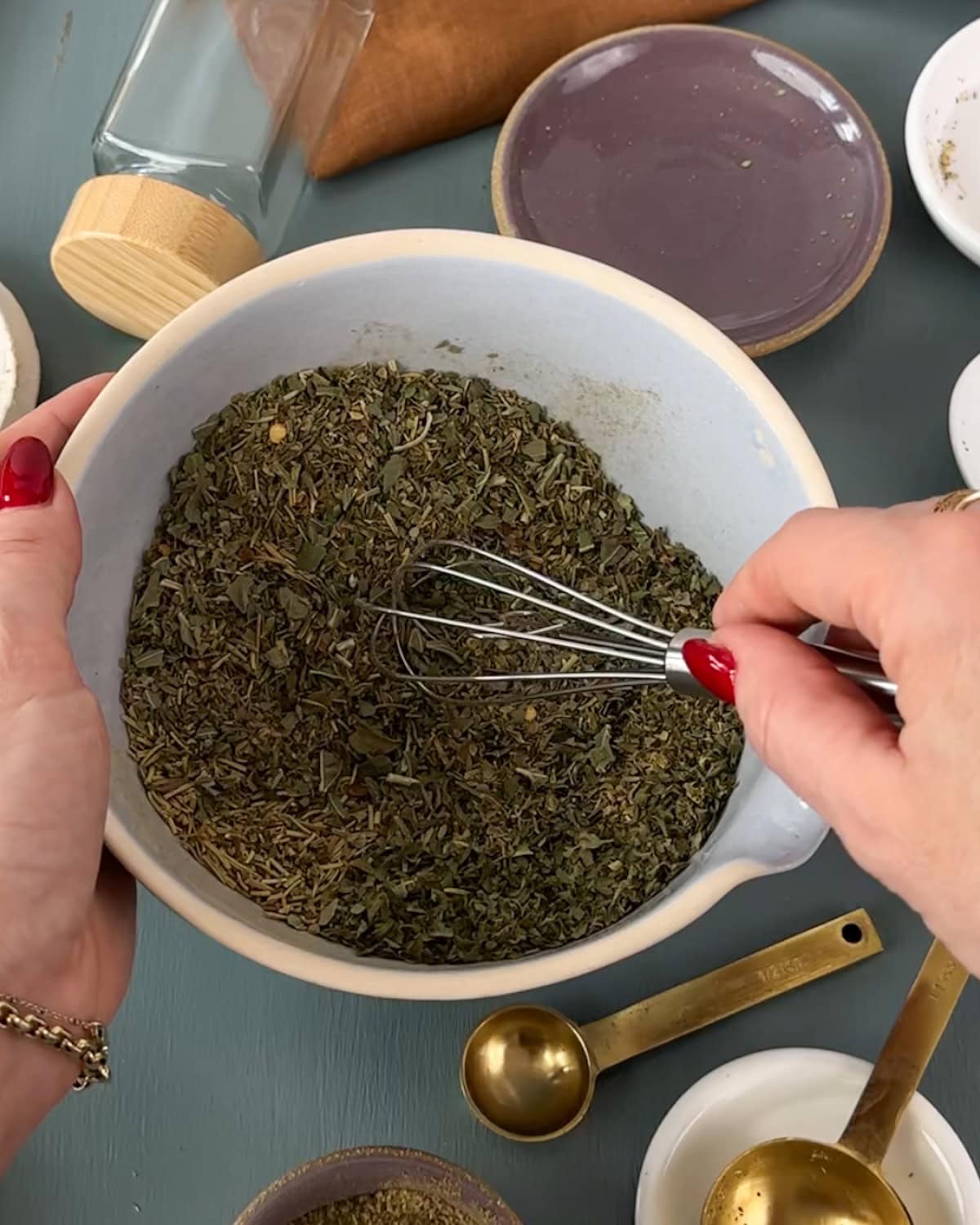
- Step 3: Whisk everything together so it is evenly mixed.
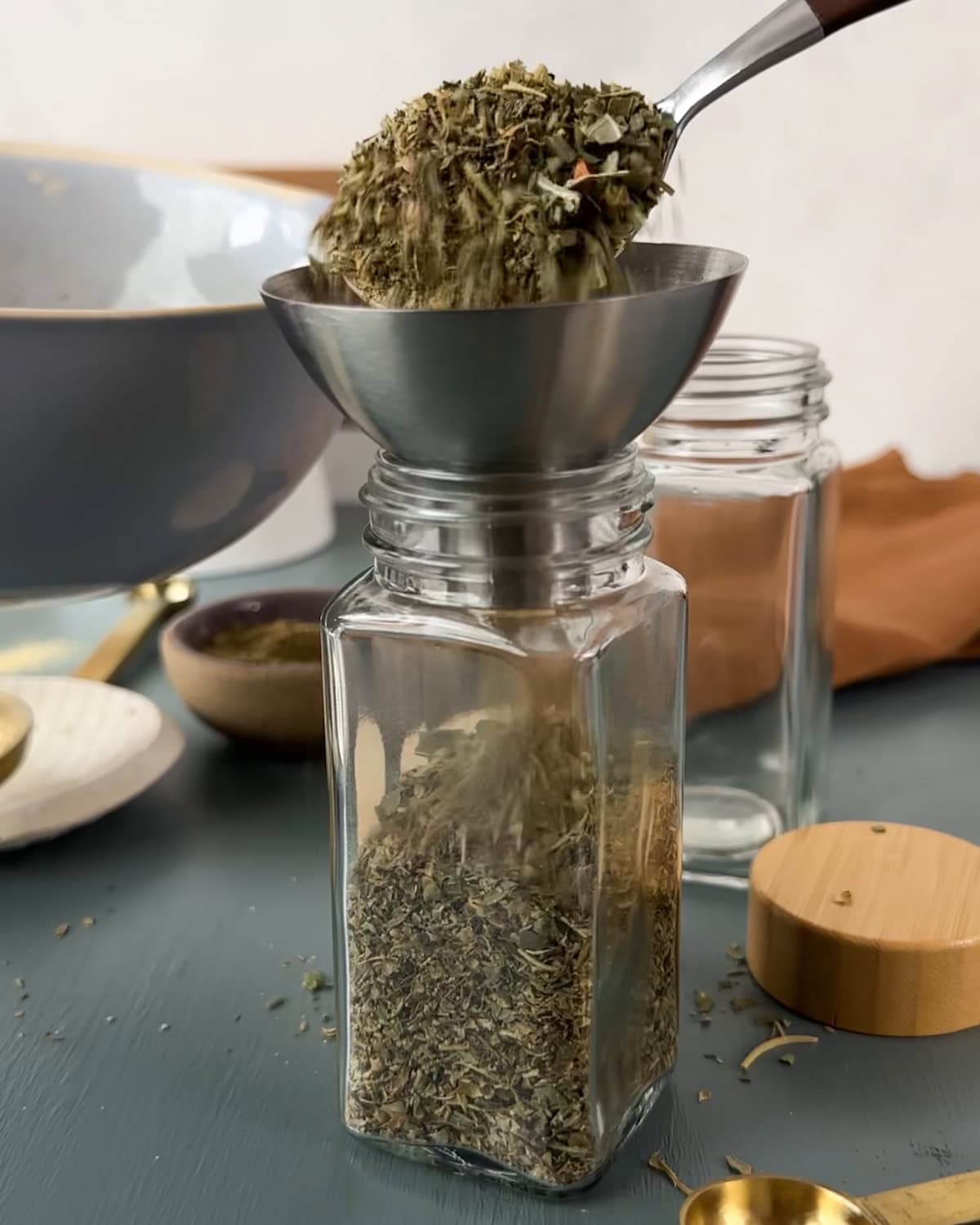
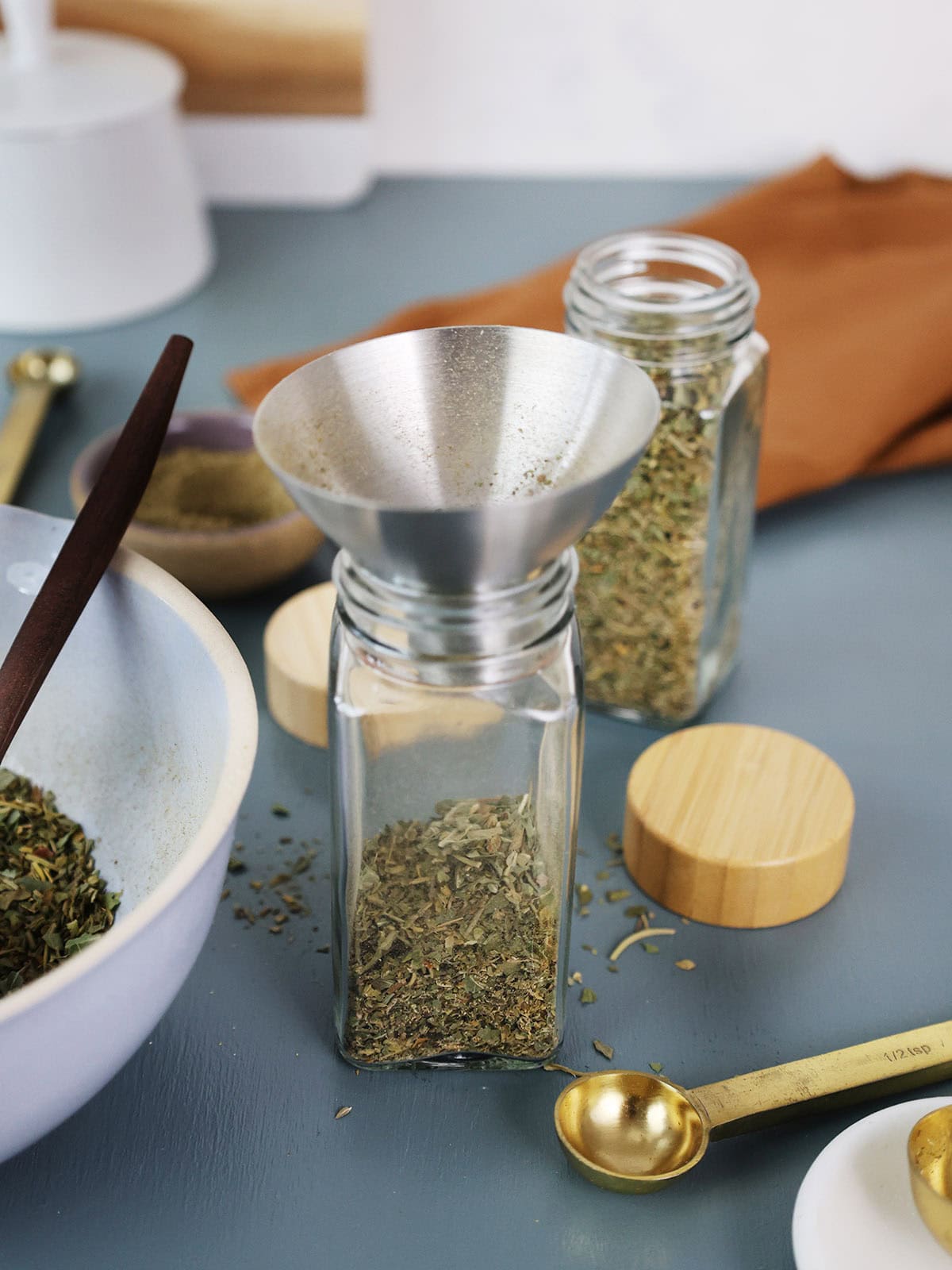
- Step 4: Use a small funnel to portion seasoning into jars.
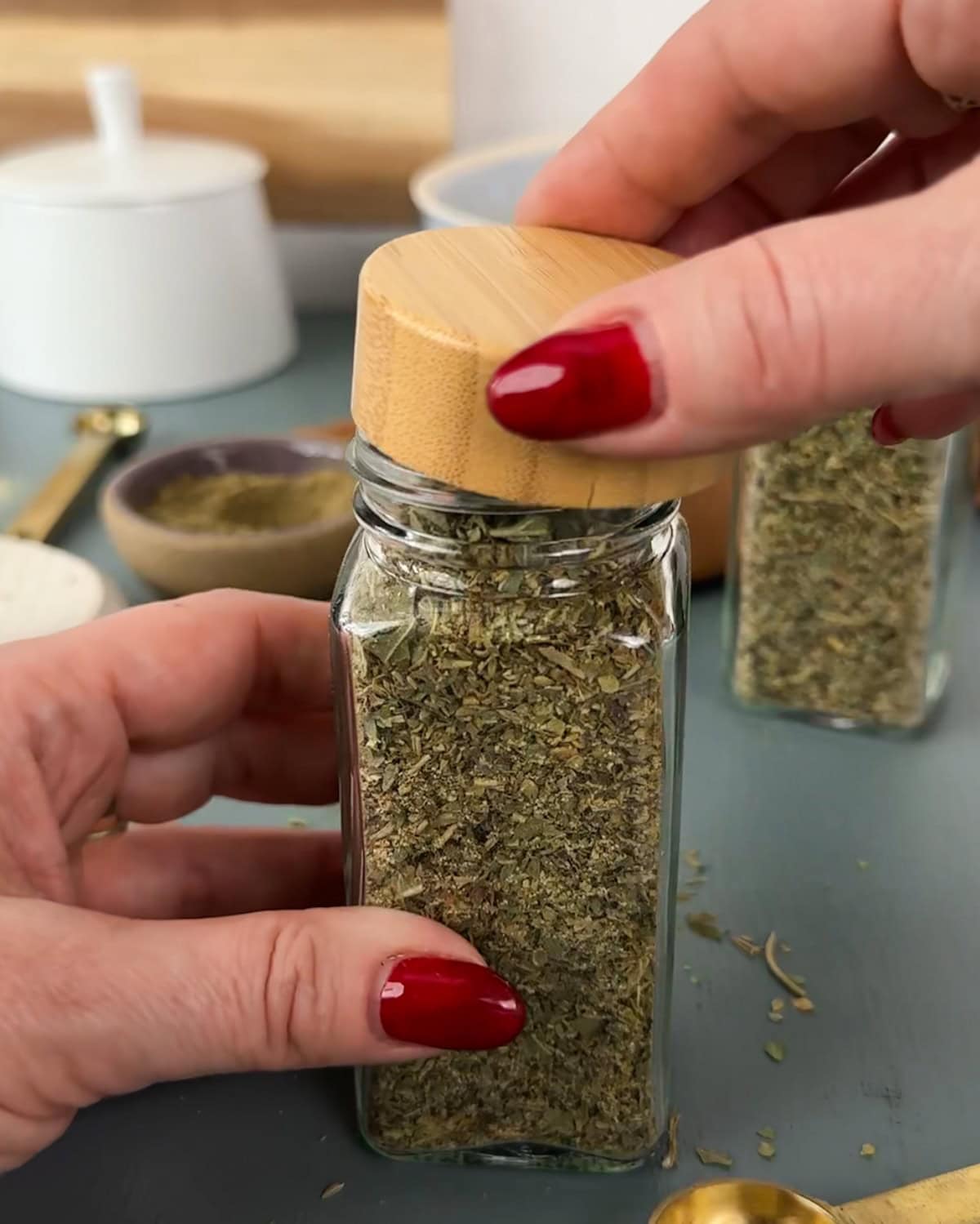
- Step 5: Add a lid to each jar and seal by tightening.
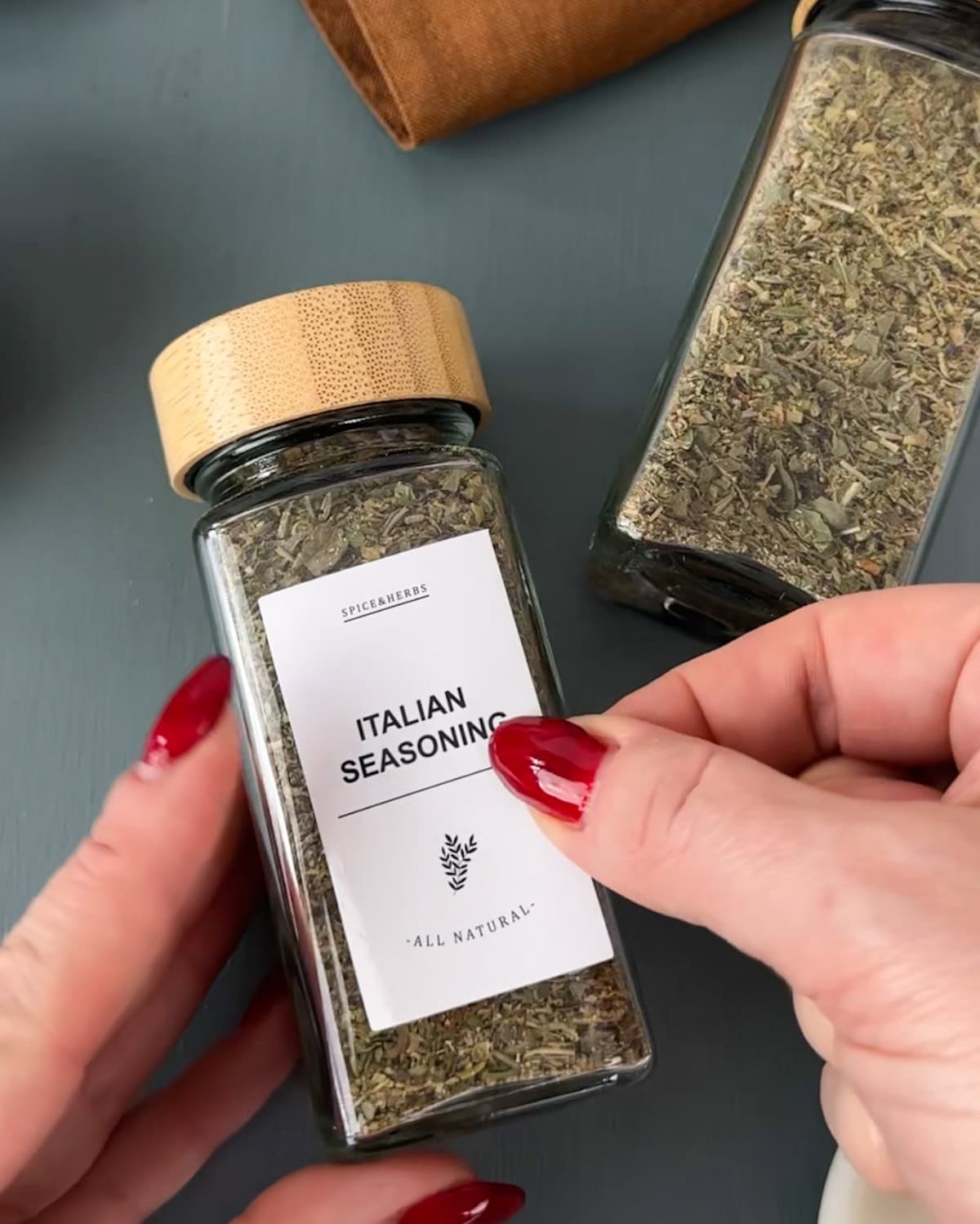
- Step 6: Label each jar clearly.
Tip: If you prefer a finer blend, you can pulse the seasoning in a food processor or spice grinder.
Tara's top tips
Fresh is best: Freshly dried herbs have the best aroma and will store the longest. Look at the expiration dates on your jars to see how old they are.
Don't add salt: Some store-bought blends include salt. I don't recommend adding salt to Italian herb seasoning because it may cause you to inadvertently over-salt the dish. It's best practice to add salt separately.
Label the jar: Whenever making your own spice blend, label the jar with the title of the mix and the date it was prepared.
Make extra: If you use a lot of Italian seasoning in your cooking, double or triple the batch so that you always have plenty on hand. The jars also make great gifts.
Old seasoning revival: If you've let your Italian seasoning sit in the cupboard past its prime, "bloom" the mixture in a little bit of hot olive oil to help release the remaining volatile oils, before adding it to your recipe.
Ways to use Italian seasoning
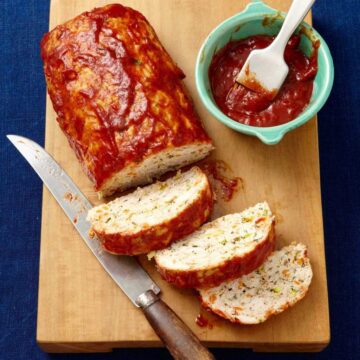
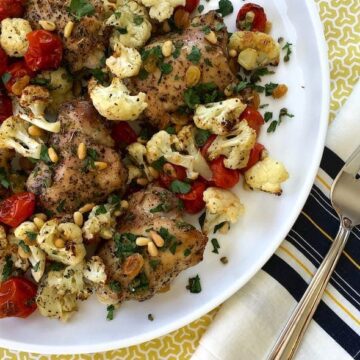
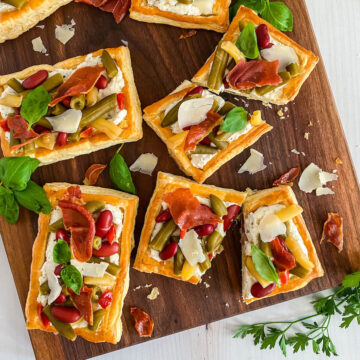
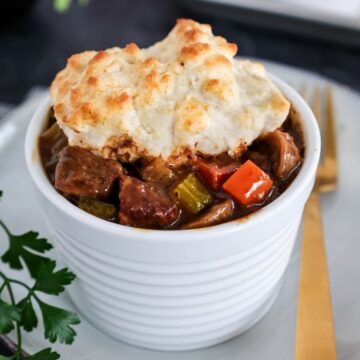
Put your Italian spice mix to good use with these favorite dishes from the blog:
Equipment
Small funnel: Have a funnel on hand that is narrow enough to fit inside the opening of your spice jar. A pepper mill funnel works best.
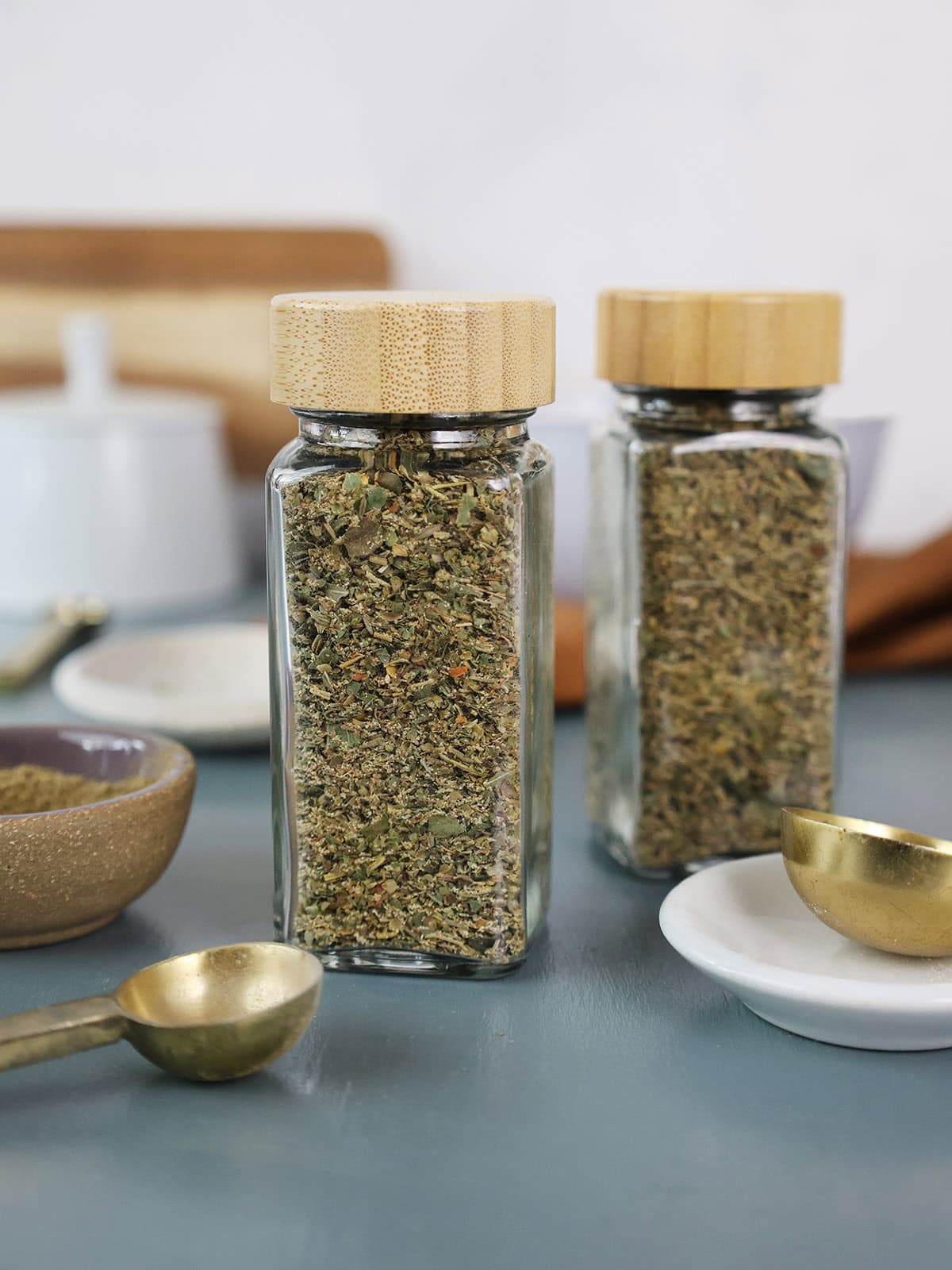
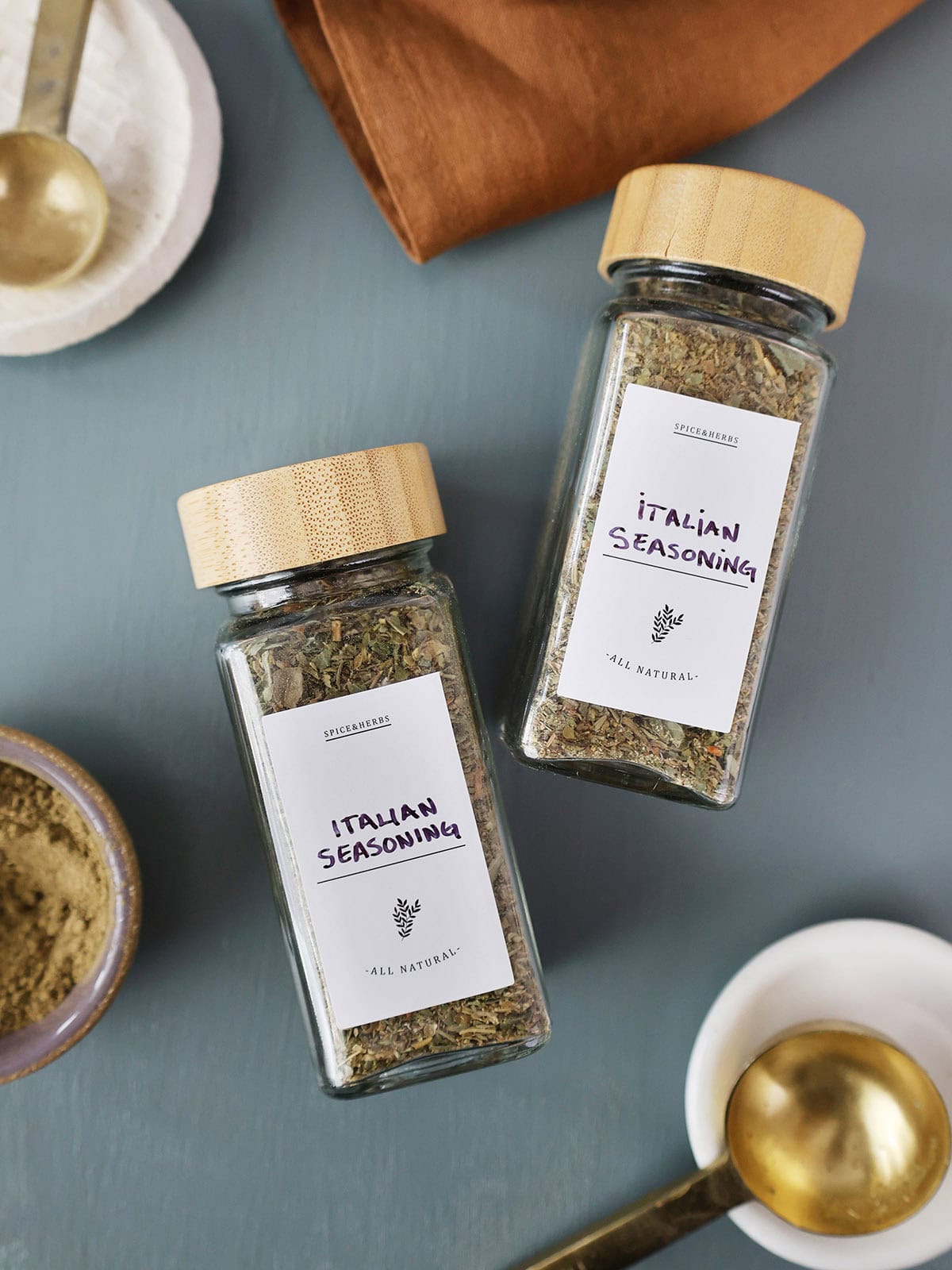
Glass spices jars: For extra freshness, it's best to store mixed Italian seasoning in glass spice jars.
Spice jar sealing liners: These 38mm foam lid liners typically fit a 4-ounce spice jar and automatically seal with the pressure of the lid .
Labels: Make sure to write the name and date on the outside of the bottle. Most spice jars come with pre-made labels. If you need more use these printable sticker sheets to make your own.
Storage
If made with new dried seasonings, the spice mixture will keep at room temperature for up to 6 months in a cool dry place. If using older dried herbs, the mixture may not be flavorful for as long.
FAQ
The base for most mixes, including mine, starts with dried oregano, basil, thyme, and rosemary. They may also contain dried marjoram and parsley, ground sage, garlic powder, onion powder, and red pepper flakes.
While Italian seasoning and herbes de Provence are both spice blends, they are not the same. Herbs de Provence is blend of savory herbs used in French cooking that has a lighter, more floral profile—in fact they often contain lavender or fennel. One could be substituted for the other in a pinch, but the flavor of the dish will be changed.
Yes, but since dried herbs have more concentrated flavor, they should be used to replace fresh herbs in a 1:3 ratio (1 teaspoon dried = 1 tablespoon fresh).
If your recipe calls for "1 packet of Italian seasoning" you should know that a standard store-bought packet is roughly 3 tablespoons. My recipes that call for Italian seasoning will always offer a teaspoon measurement.
More Italian-inspired recipes
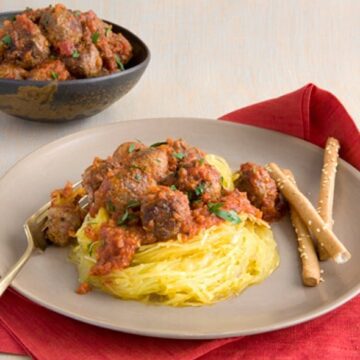
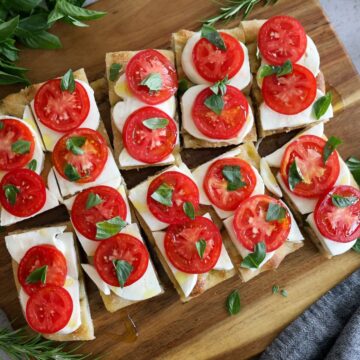
If you love Italian cooking, try these flavorful recipes:
Rate this recipe! ⭐⭐⭐⭐⭐
Scroll to the bottom of the page to rate and comment on this recipe. Leaving comments, questions, and ratings helps other too!
📖 Full Recipe
Homemade Italian Seasoning
Video
Ingredients
- 3 tablespoons dried oregano
- 2 tablespoons dried basil leaves
- 1 ½ tablespoons dried parsley leaves
- 1 ½ tablespoons dried thyme leaves
- 1 ½ tablespoons dried rosemary
- 1 ½ tablespoons dried marjoram leaves
- 1 teaspoon dried sage
- ½ teaspoon red pepper flakes
- 2 teaspoons garlic powder
Instructions
- Mix everything together and use a funnel to fill spice jars, or store in one large jar or container.
- The spice mixture will keep at room temperature for up to 6 months*. Don’t store close to heat or in the sun.
Notes
Nutrition Per Serving

Tara Teaspoon
I’ve been in food publishing for over 25 years, creating recipes & food-styling for magazines, books, television, food brands, & advertising. With two cookbooks under my belt and thousands of my recipes at your fingertips, I hope you'll be inspired to spend more time in the kitchen!
Jill says
Thanks for this! I love making my own spice blends because they're cheaper and free of unnecessary additives. The flavor of this Italian mix is spot on. Love it!
Tara Teaspoon Admin says
I use this mix a ton! So glad it's helpful for you too.
Dgm says
Thanks for this; I look forward to using it.
Tara Teaspoon Admin says
You're welcome! I hope you enjoy it as much as I do!