
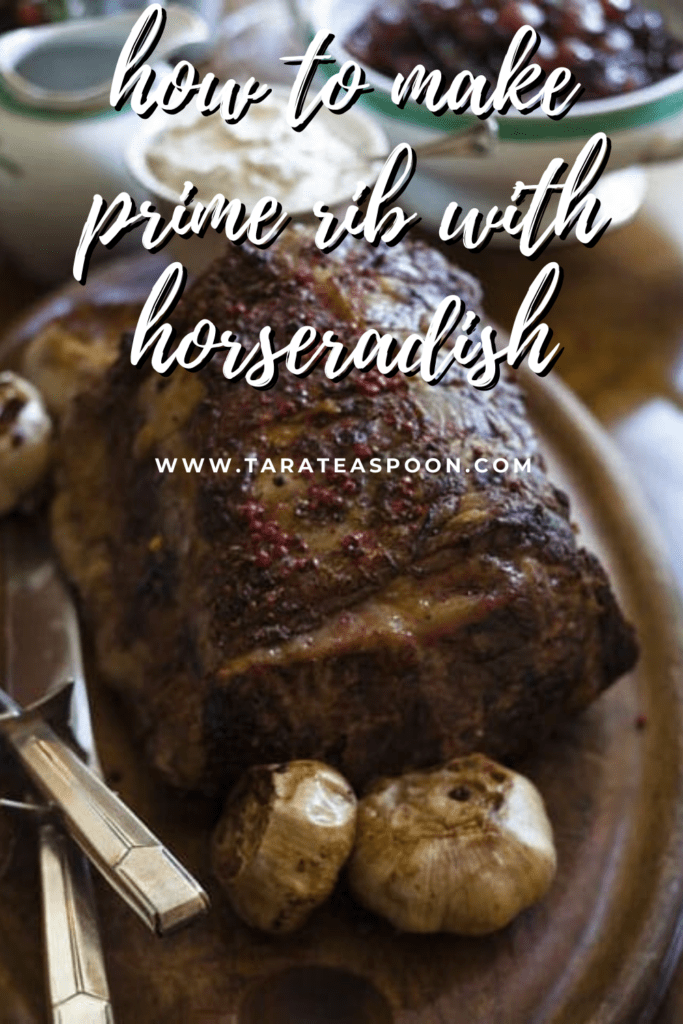
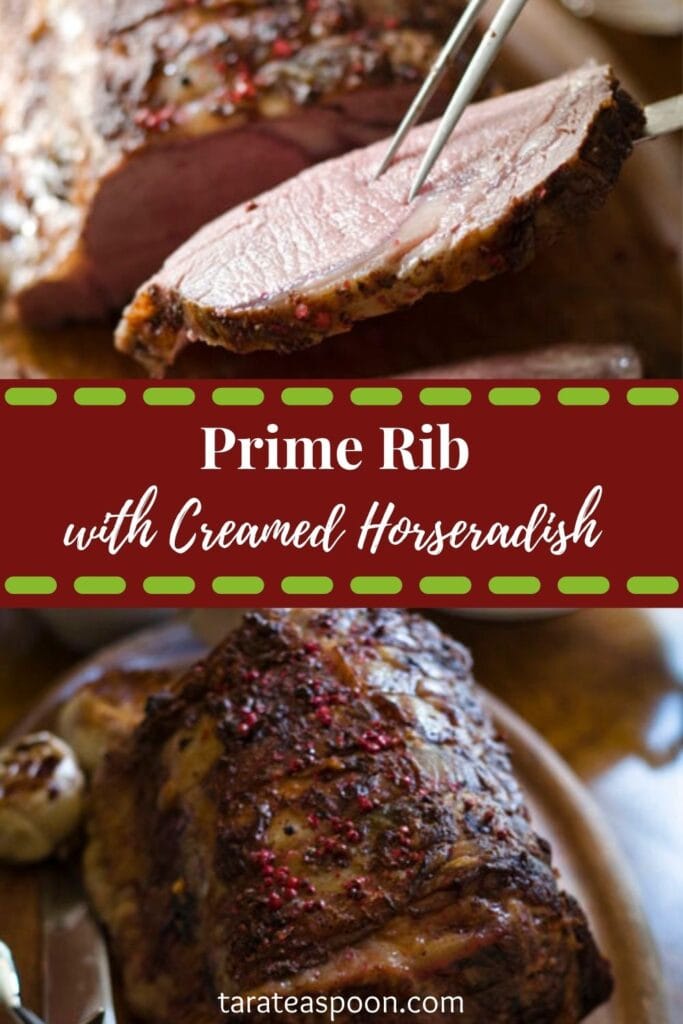
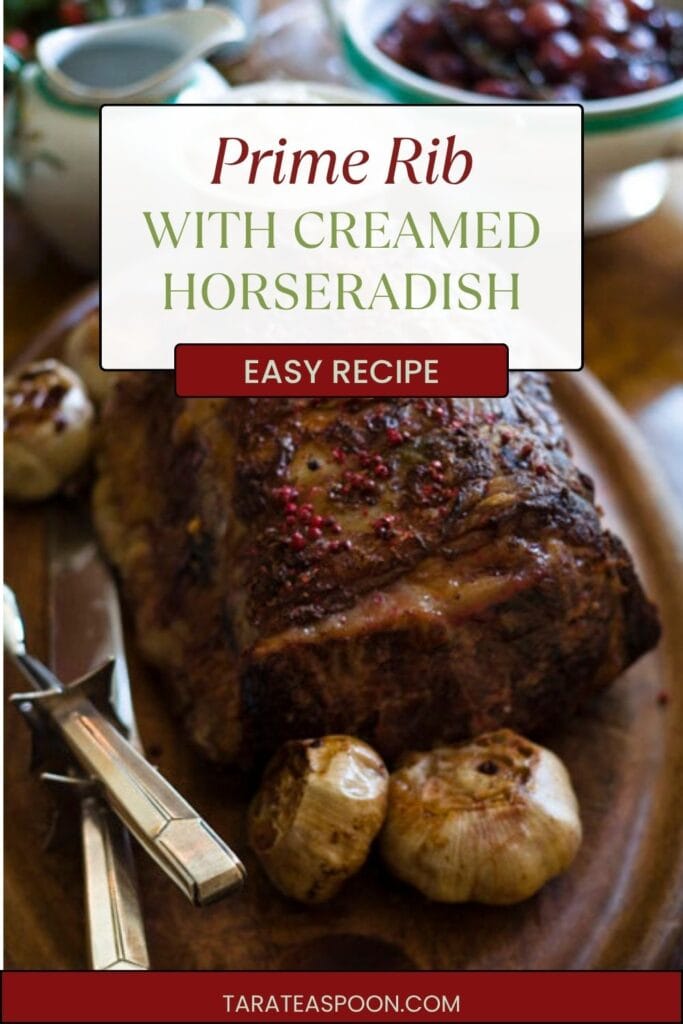
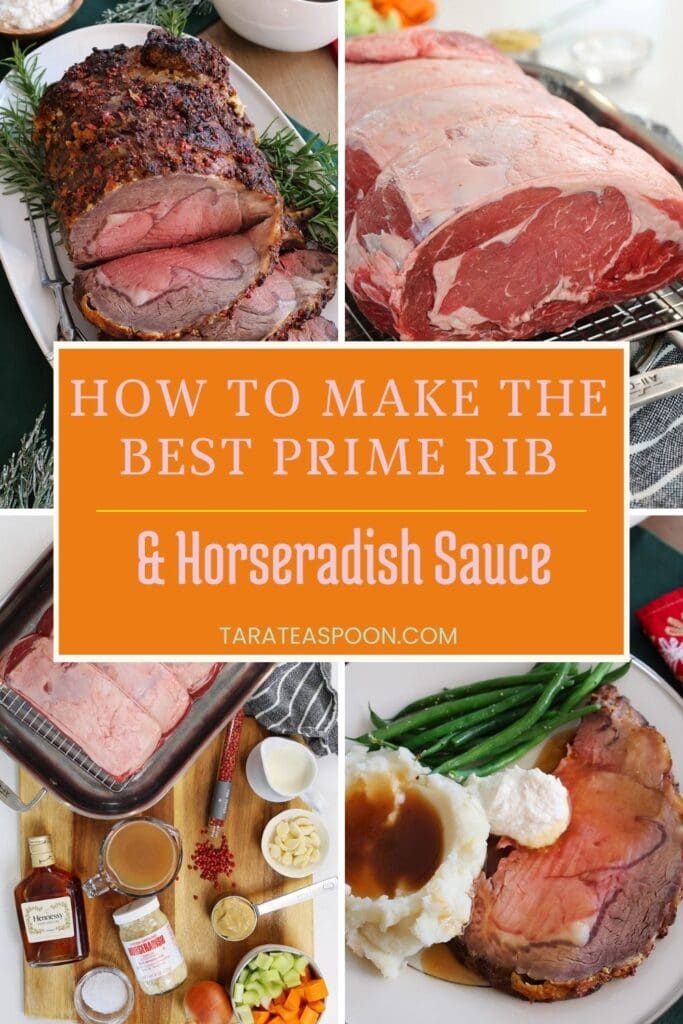
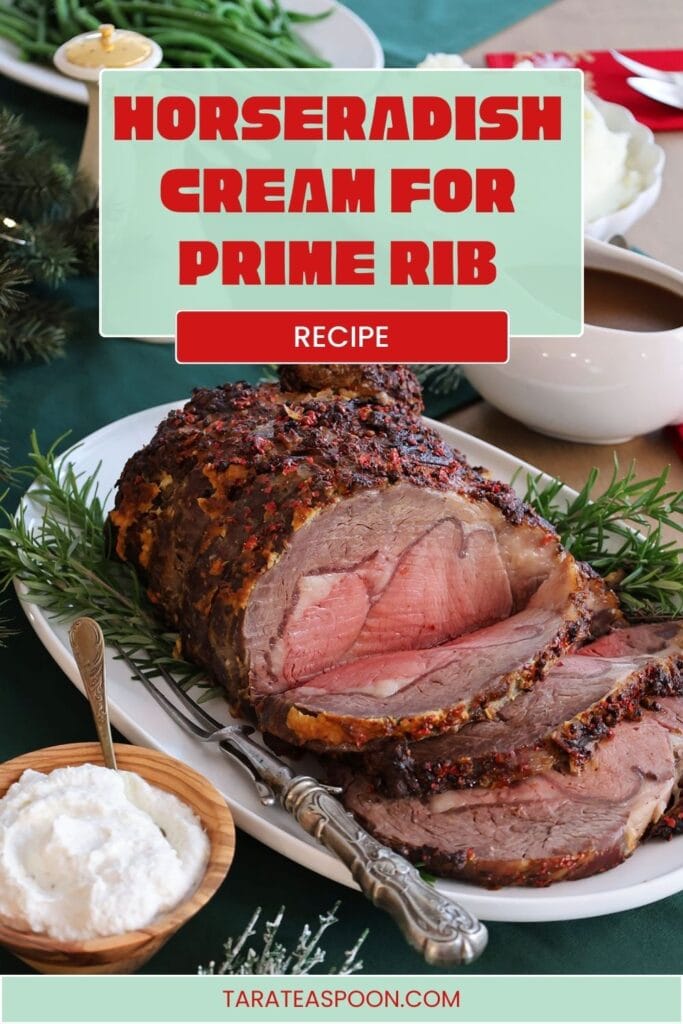
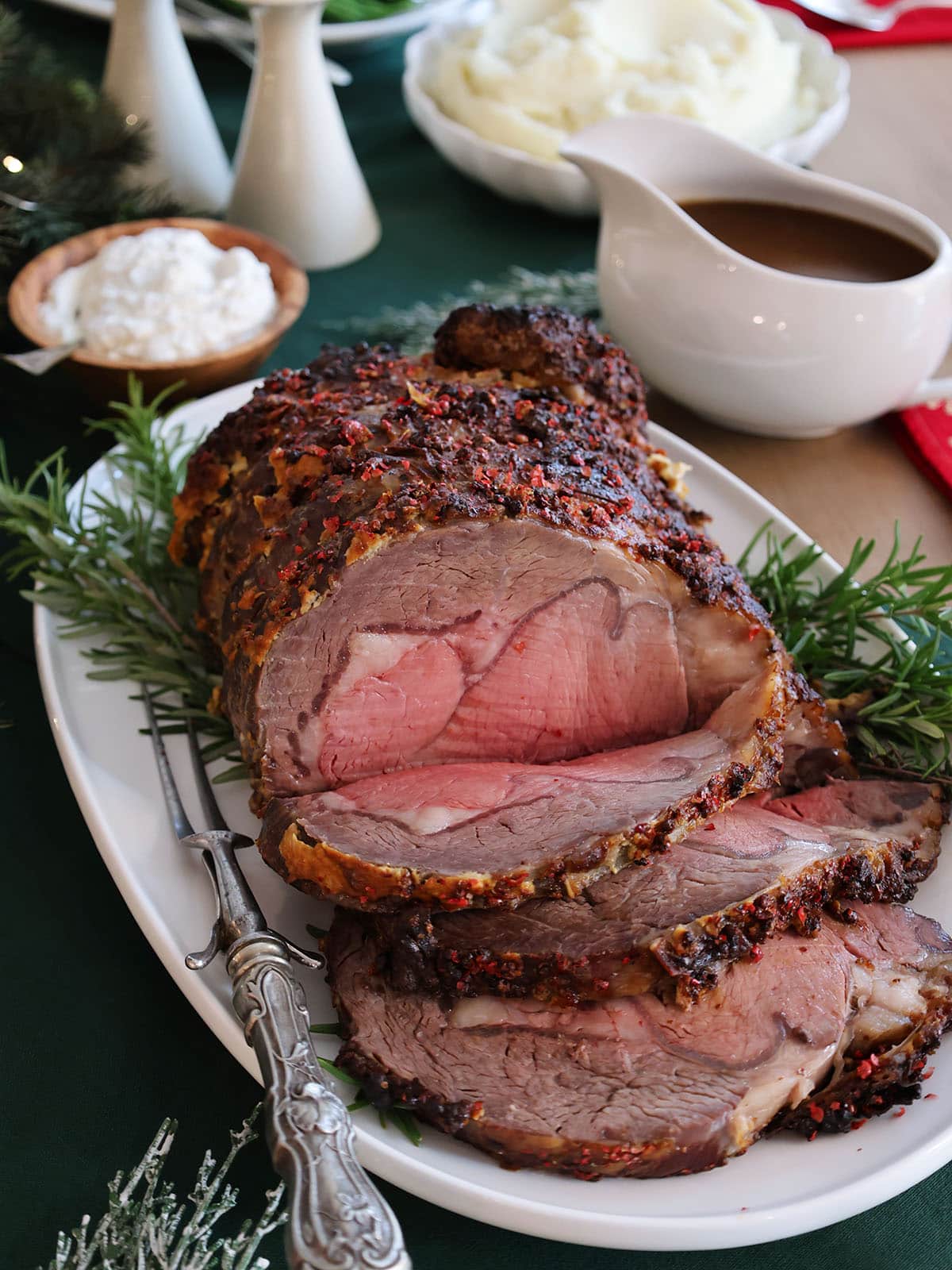
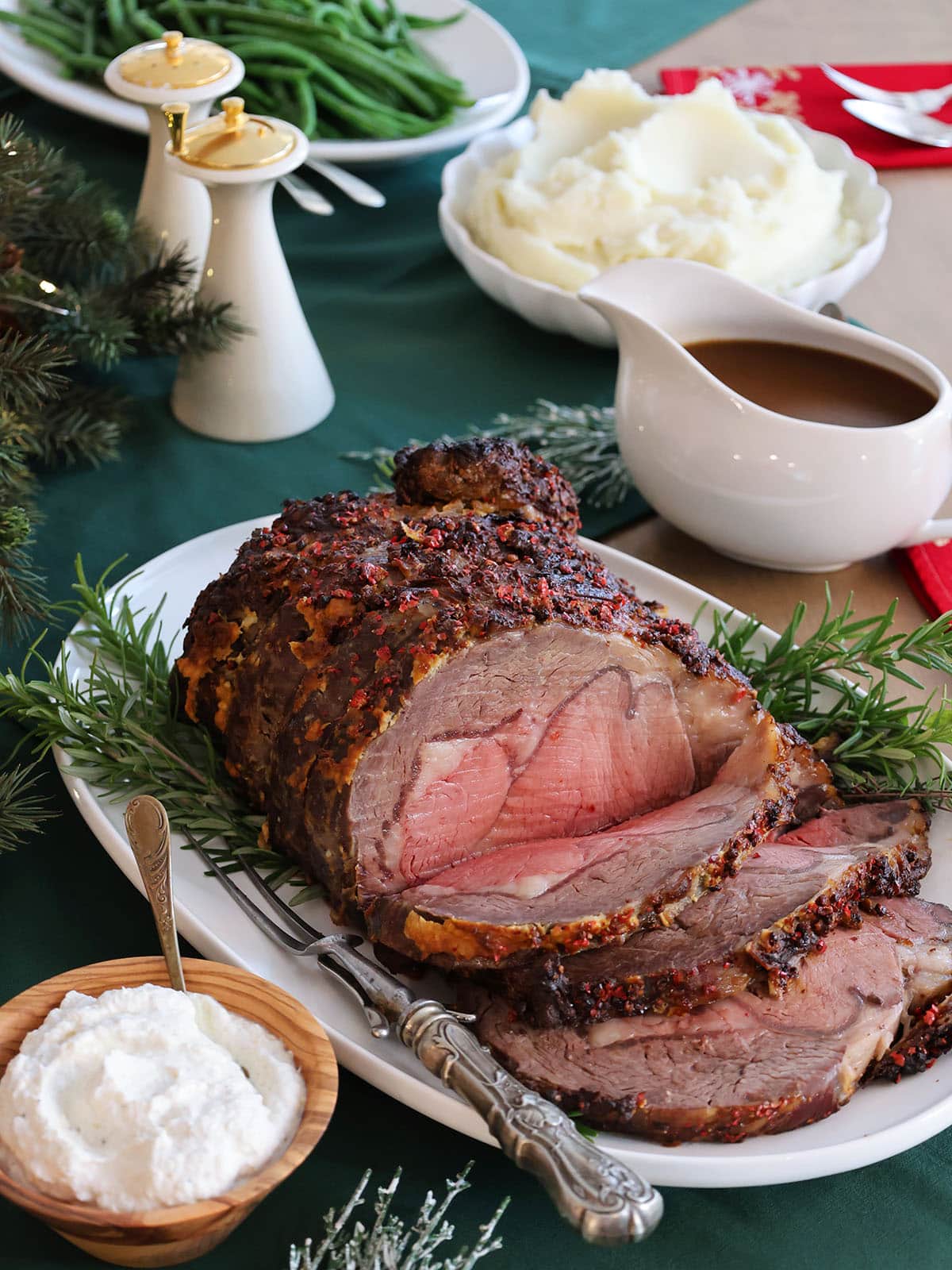
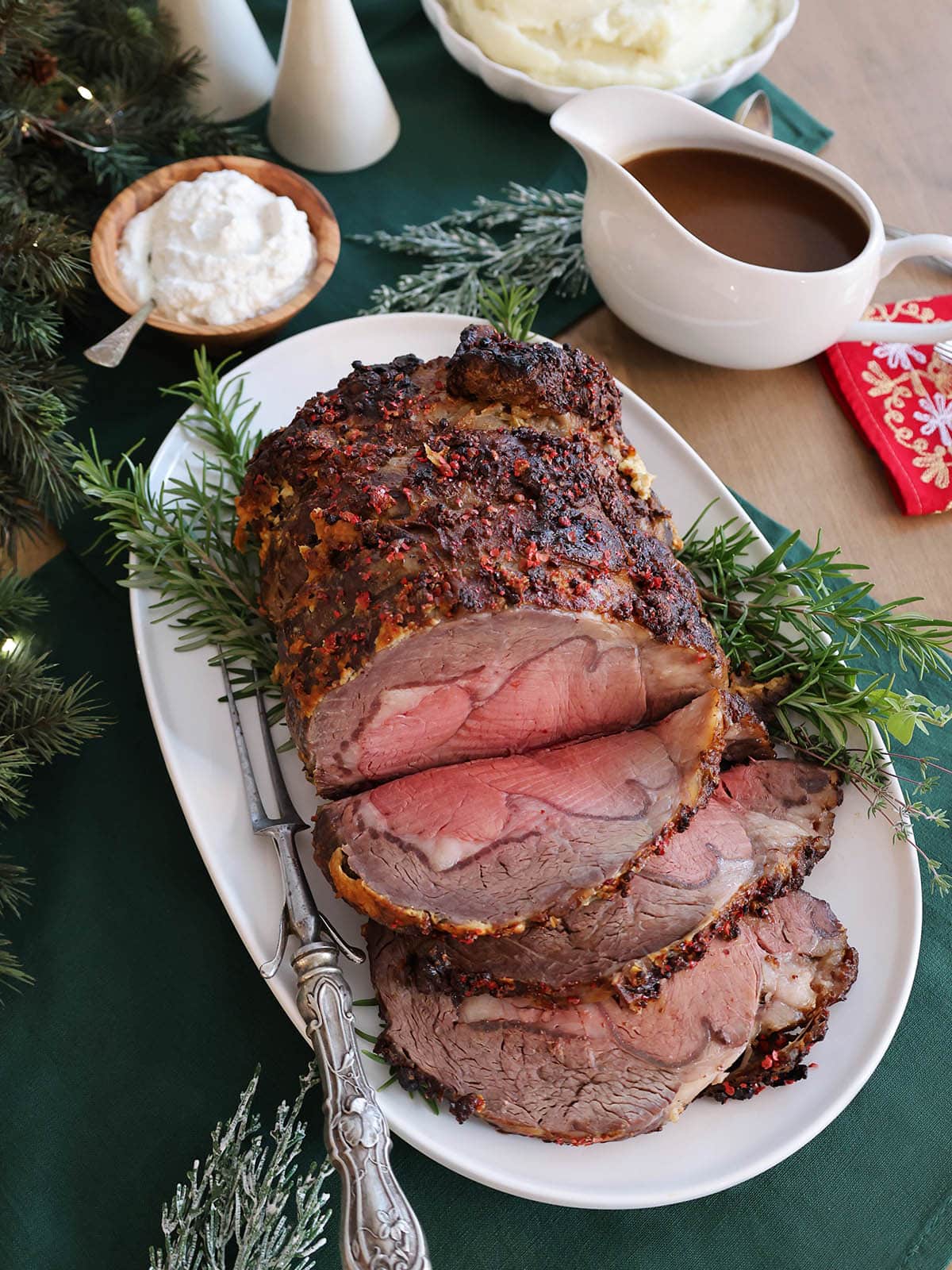
Look no further for the perfect Prime Rib Roast recipe with creamed horseradish! Follow my simple, step-by-step method to make a show stopping holiday centerpiece that delivers restaurant-quality results. The peppercorn-crusted centerpiece main dish is easier than it looks and guaranteed to impress your family and friends.
In this article you'll learn:
- How to choose the ideal roast size and choose between bone-in or boneless cuts.
- The butcher’s secret for a roast that has bone-in flavor but is easy to carve and serve.
- An in depth temperature guide for hitting a perfect medium-rare every time.
- How creating a peppercorn-mustard crust seasons the meat and juices.
- How to make a Cognac-infused au jus and whipped horseradish sauce from scratch.
Generated with AI and experts from the Tara Teaspoon team.
Over the years, prime rib has become a family favorite for big holiday meals. Everyone loves... I mean loves... a tender, juicy beef roast with perfectly caramelized crust.
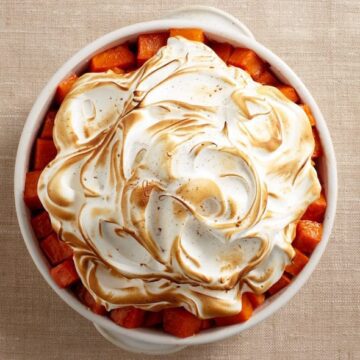
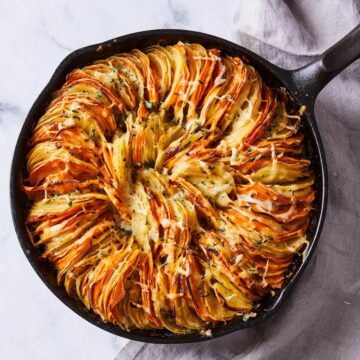
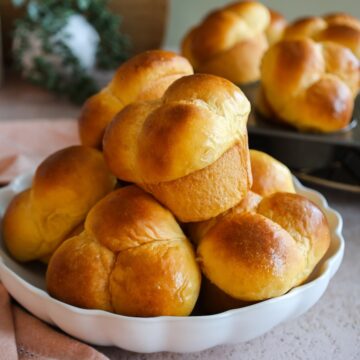
It's the perfect main dish to pair with all your all favorite side dishes like Scalloped Sweet Potatoes, Rosemary Honey Glazed Carrots, and Super Soft Classic Dinner Rolls.
Plus, cooking a prime rib roast properly in the oven is surprisingly simple to do at home and creates the ultimate centerpiece for special occasions and holiday dinners like Easter and Christmas. That's why I call this dish, 'The Big Easy!'
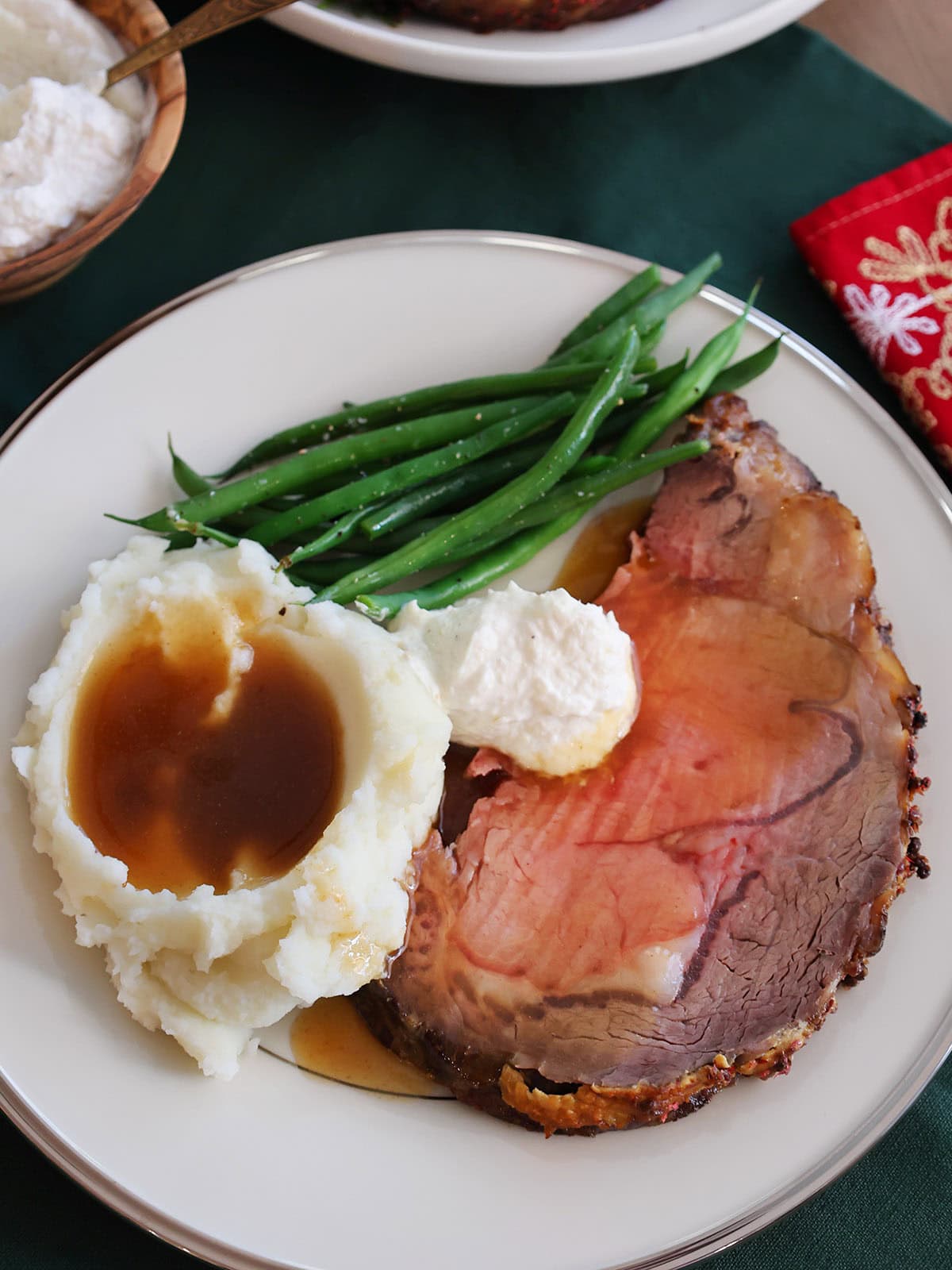
Prime rib made simple and approachable
Known for its rich flavor, tender texture, and beautiful presentation, prime rib is an expensive cut of meat that intimidates many home chefs. No one wants to be responsible for messing up the main dish!
Thankfully, with the right seasoning, cooking method, and temperature control, even novice home chefs can confidently achieve a perfectly juicy, medium‑rare roast with a flavorful crust.
Here's what makes this recipe special:
- Simple seasoning: Prime rib is naturally flavorful. It is enhanced with kosher salt and a delicious garlic and mustard rub topped with pink peppercorns.
- Clear steps: I've included a comprehensive photo tutorial to walk you through everything you need to know for cooking prime rib roast to restaurant‑quality perfection.
- Easy preparation: It takes less than 20 minutes of hands-on time to prepare and cook the roast. All you really need to make it a success is a meat thermometer (don’t overcook that baby!).
I'm not going to lie, I was a little intimidated to try roasting such a big piece of meat, but with your step by step instructions, this really was a no fail attempt at prime rib! The meat was tender, juicy, and full of flavor! Plus, the horseradish sauce? I die! Everyone loved it and I came across as a pro, which makes it even better!
- Marie
Jump to:
- In this article you'll learn:
- Prime rib made simple and approachable
- What is prime rib?
- Type of roast to buy
- Tara's tips
- Ingredients and variations
- How to make prime rib
- Temperatures to cook prime rib perfectly
- Expert tips
- How to make creamed horseradish and pan sauce
- Carving a prime rib
- Equipment
- What to serve with a standing rib roast
- Storage and leftovers
- FAQ
- More impressive roast recipes
- 📖 Full Recipe
- 💬 Comments & Reviews
What is prime rib?
Prime rib refers to meat taken from the primal rib section. A butchered cow is sectioned into 8 primal cuts (basic sections). Each primal cut has specific characteristics of texture and flavor.
The rib cut comes from the cow's back and includes ribs 6 to 12 (7 total ribs) that are tender and highly marbled. It can be purchased boneless or bone-in, and you can have the butcher cut it to the size you'd like; you don't have to buy all 7 ribs!
Bone-in prime rib is also called standing rib roast because the bones actually hold the meat off of the baking pan in an upright position.
Type of roast to buy
- Boneless or bone-in: The benefit of boneless prime rib is that it's easier to cut the meat. However, the bones help to regulate temperature while cooking and add a lot of flavor to the juices and drippings (to be used for au jus!). To get the best of both words, I order a standing rib roast and have the butcher cut the meat from the bones. Then I tie the bones back onto the roast for cooking and easily remove them before serving.
- Marbling: Look for a rib roast with good marbling throughout the meat. Marbling refers to the white fat streaks within the muscle. Since the fat contributes to the flavor, better marbling means better flavor.
- How many pounds? It's recommended 1 pound of meat per person for bone‑in roasts (because the weight includes the heavy bones). This estimate equates to one rib for every 2 to 3 people. Plan on ½ to ¾ pound per person for a boneless roast.
Tara's tips
The 'sides' adjustment: If you are serving a heavy spread of sides (like Scalloped Sweet Potatoes or Classic Dinner Rolls), you can safely lean toward ¾ pound per person for a bone-in roast, rather than 1 pound/person.
Shrinkage: Remember that beef shrinks by about 15% to 20% during the roasting process. Starting with a slightly larger roast ensures your generous portions stay generous once they hit the plate.
The butcher secret: For the best results, buy a standing rib roast and ask the butcher to cut the meat away from the bones and then tie them back on. This gives you the flavor of a bone-in roast with the carving ease of a boneless one.
LOVE!! This recipe is the best and so EASY!! I made it this year for our Christmas dinner. It came out perfect and it couldn't have been any simpler to prep and make. Everyone raved about it!! This is our new holiday tradition. Delicious, Impressive and Easy!! What more could you ask for?!!
- Susan
Ingredients and variations
For a flavorful, impressive bone in prime rib recipe you'll need a few special ingredients. Check out these tips before heading to the store. See recipe card for full list of ingredients and quantities.
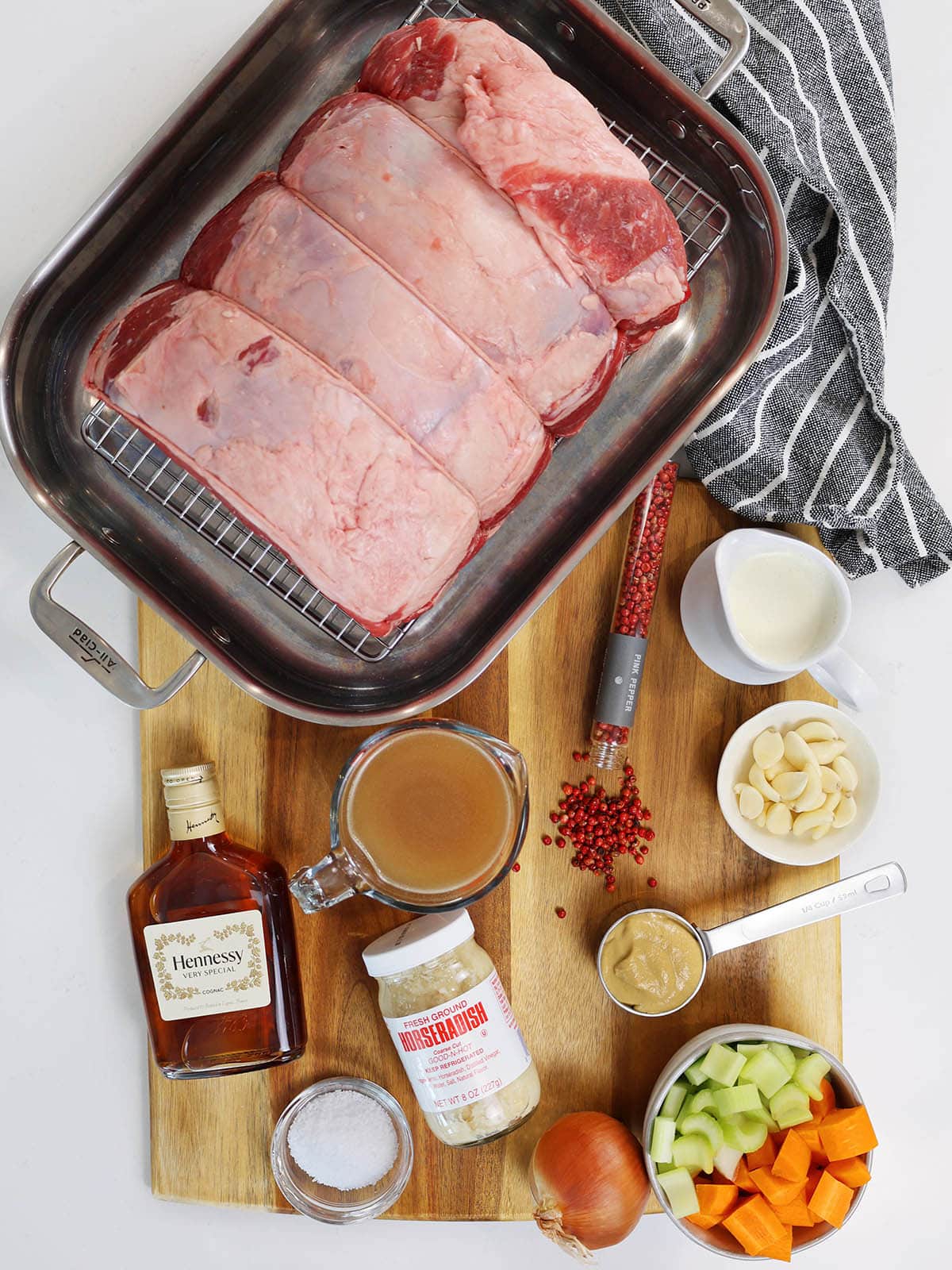
For the roast
- Beef rib roast: This recipe was developed for a 9-pound prime rib beef roast. It should include 4 ribs with the meat cut away from the bone. Tie the bones back on with kitchen twine for cooking.
- Kosher salt: Has a larger crystal size and is less salty than traditional iodized table salt. It's the most important seasoning for the roast.
- Mirepoix (onion, carrot, celery): I used a mixture of medium carrots peeled and cut into bite-sized pieces, a small onion cut into large dice, and 1 rib of celery cut into small pieces.
- Dijon mustard
- Minced garlic: Fresh garlic tastes best, but you can also substitute jarred minced garlic.
- Whole pink peppercorns: I crushed pink peppercorns to make the roast prettier. They also have a sweeter, more fruity flavor than black peppercorns. If you don't have pink peppercorns, use black instead.
For creamed horseradish and pan sauce
- Heavy cream
- Prepared horseradish
- Cognac: (optional) Adds flavor to the au jus pan sauce. The alcohol will burn off, but if you'd prefer a non-alcoholic option, feel free to replace with cognac with beef broth.
- Beef broth: I like to use Better Than Bouillon.
- Cornstarch
How to make prime rib
The step-by-step instructions below might look long, but I promise this is a simple recipe for cooking a prime rib in the oven with very little hands-on time. I’ll guide you every step of the way, so there's no way to fail! See recipe card for comprehensive directions.
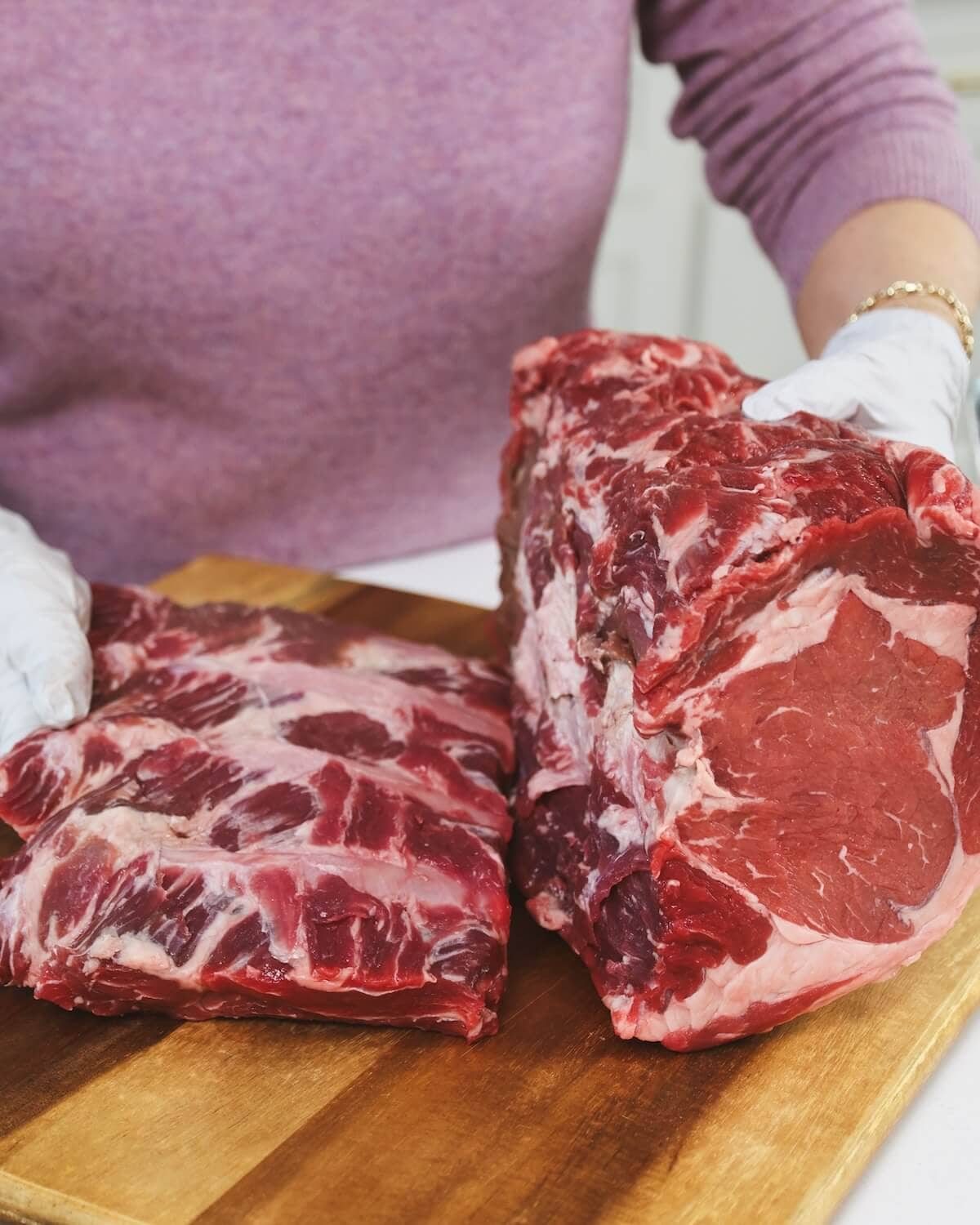
- Step 1: You or the butcher should separate the rib bones from the meat.
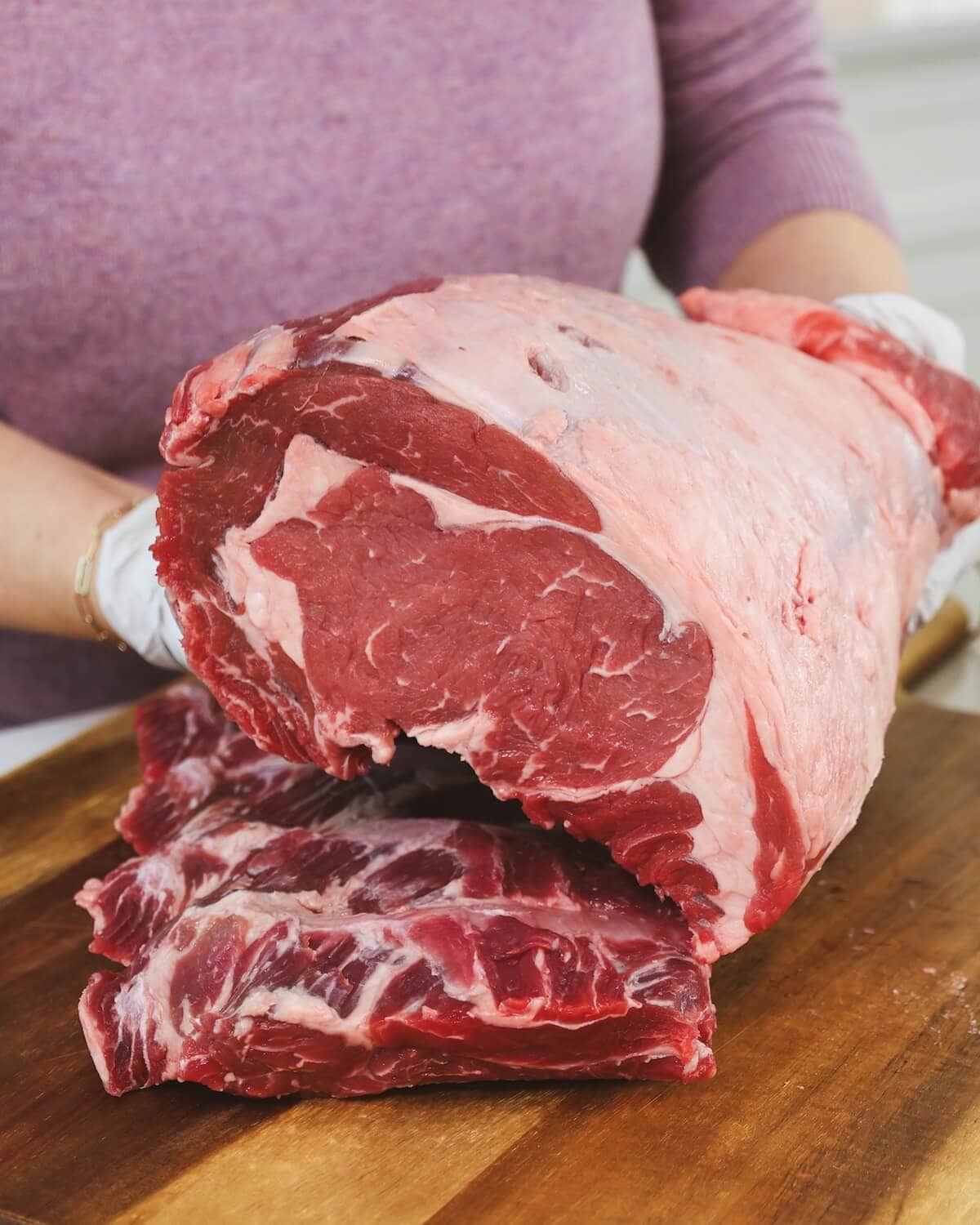
- Step 2: Place the meat back onto the rib bones.
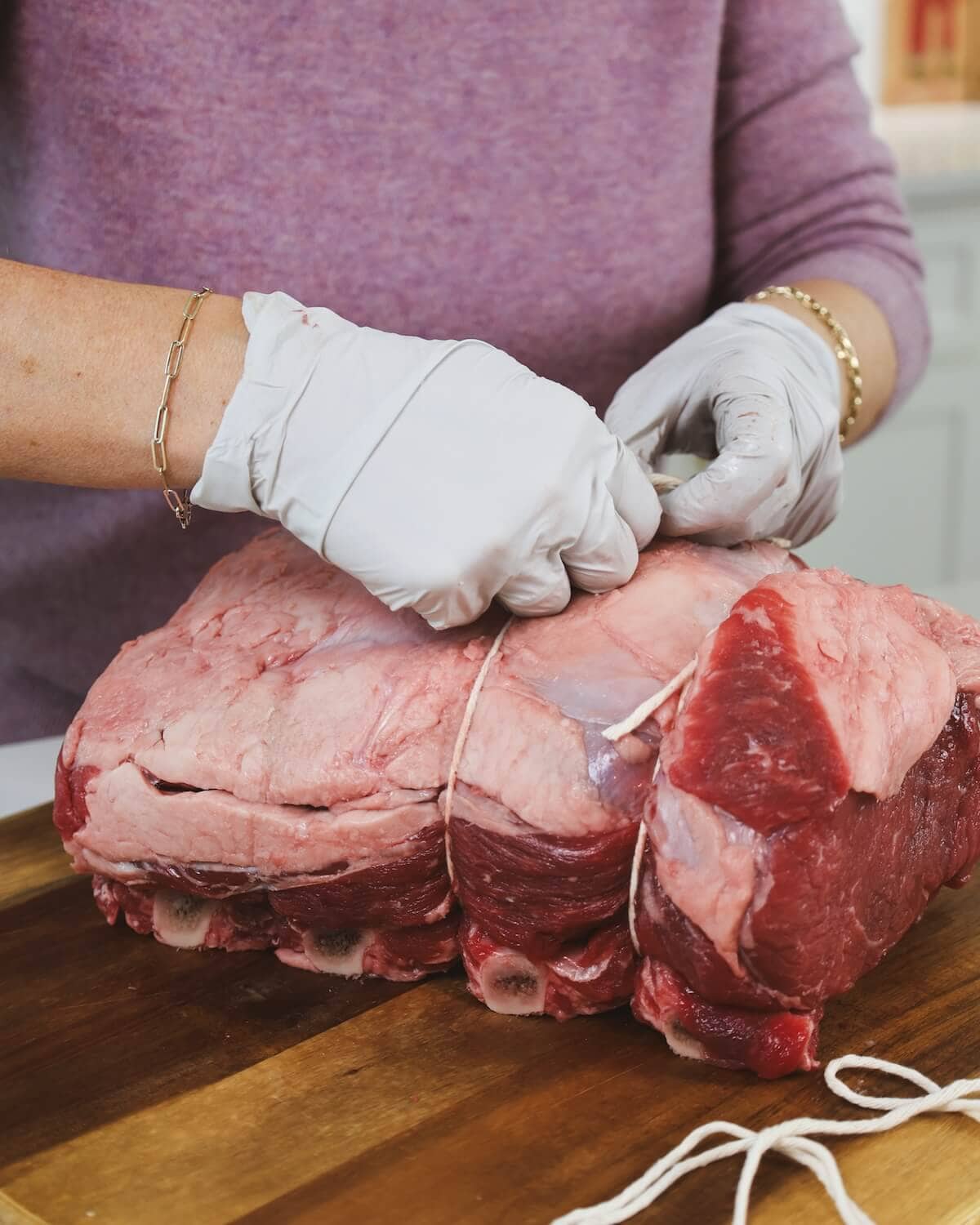
- Step 3: Tie the rib bones and meat back together with kitchen twine.
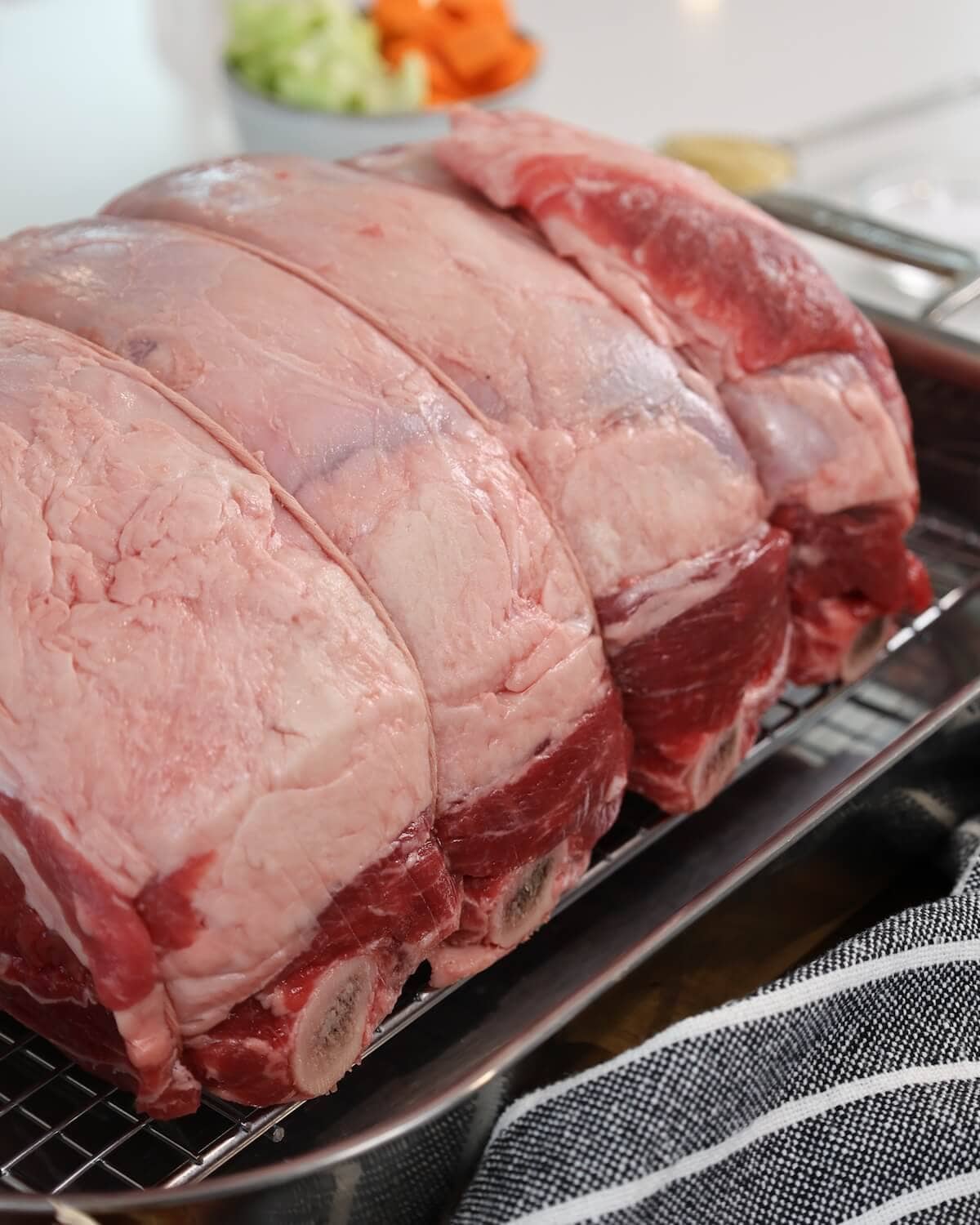
- Step 4: Place the roast in a roasting pan on a rack.
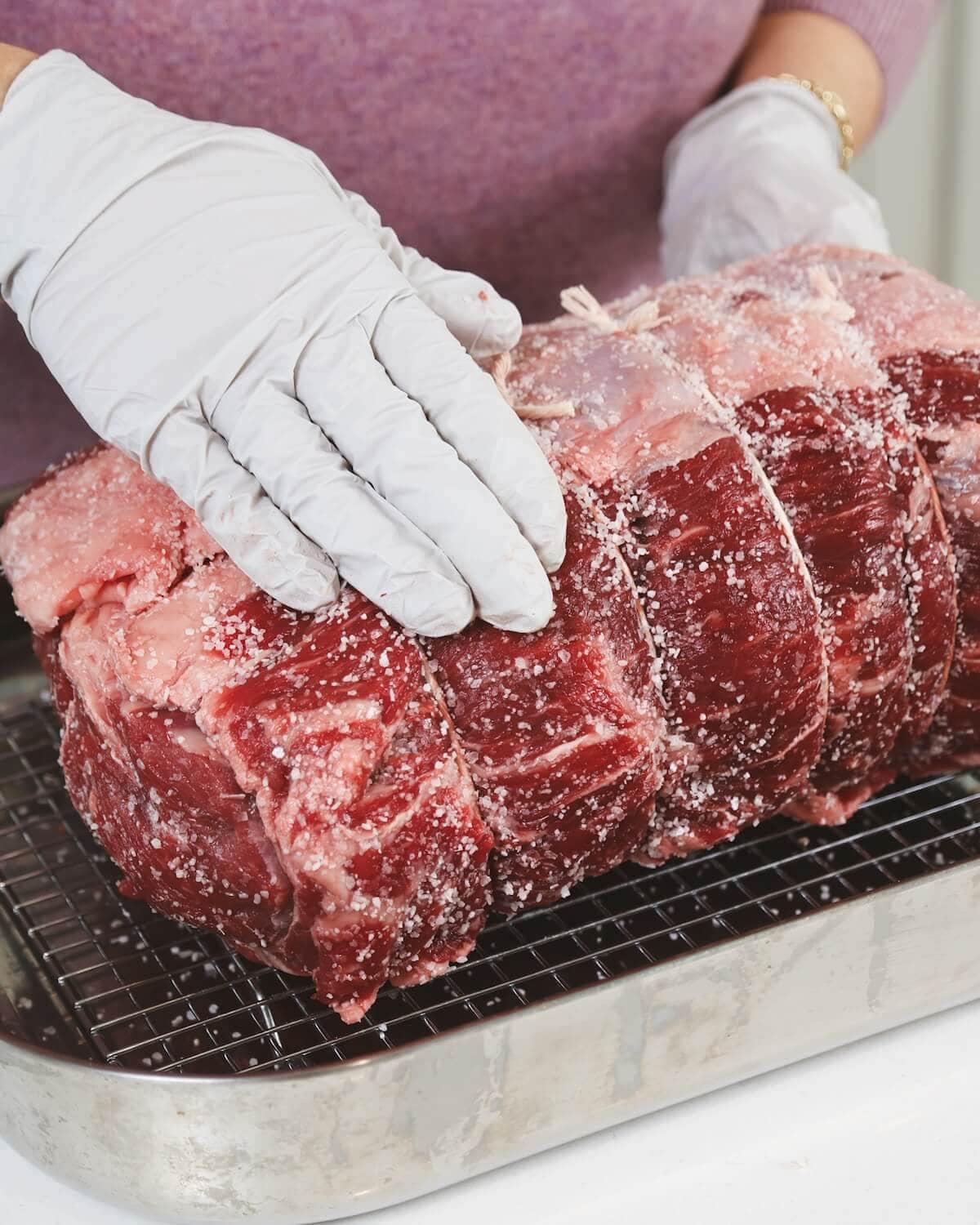
- Step 5: Rub the roast with kosher salt.
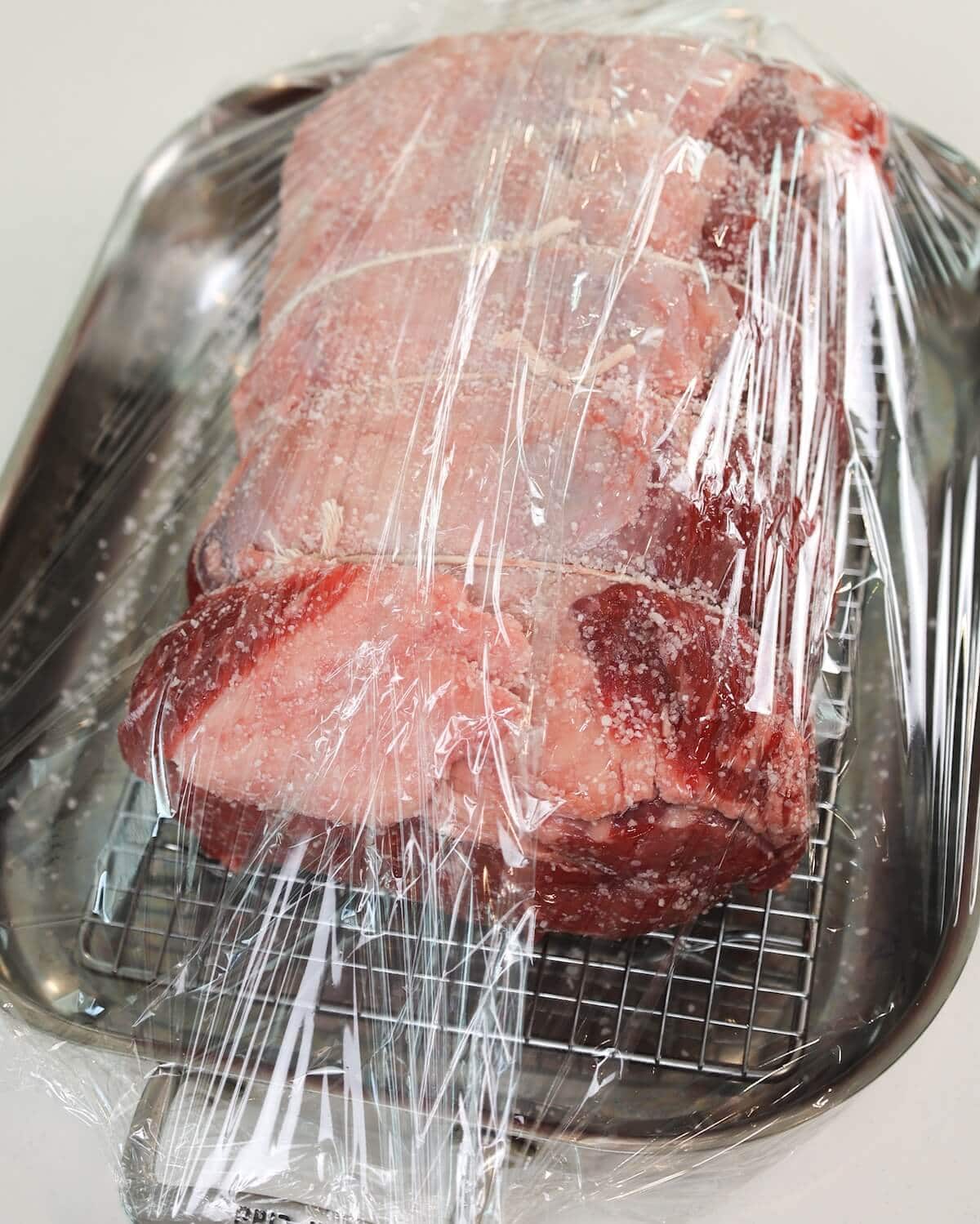
- Step 6: Wrap roast in plastic wrap and let it come to room temperature.
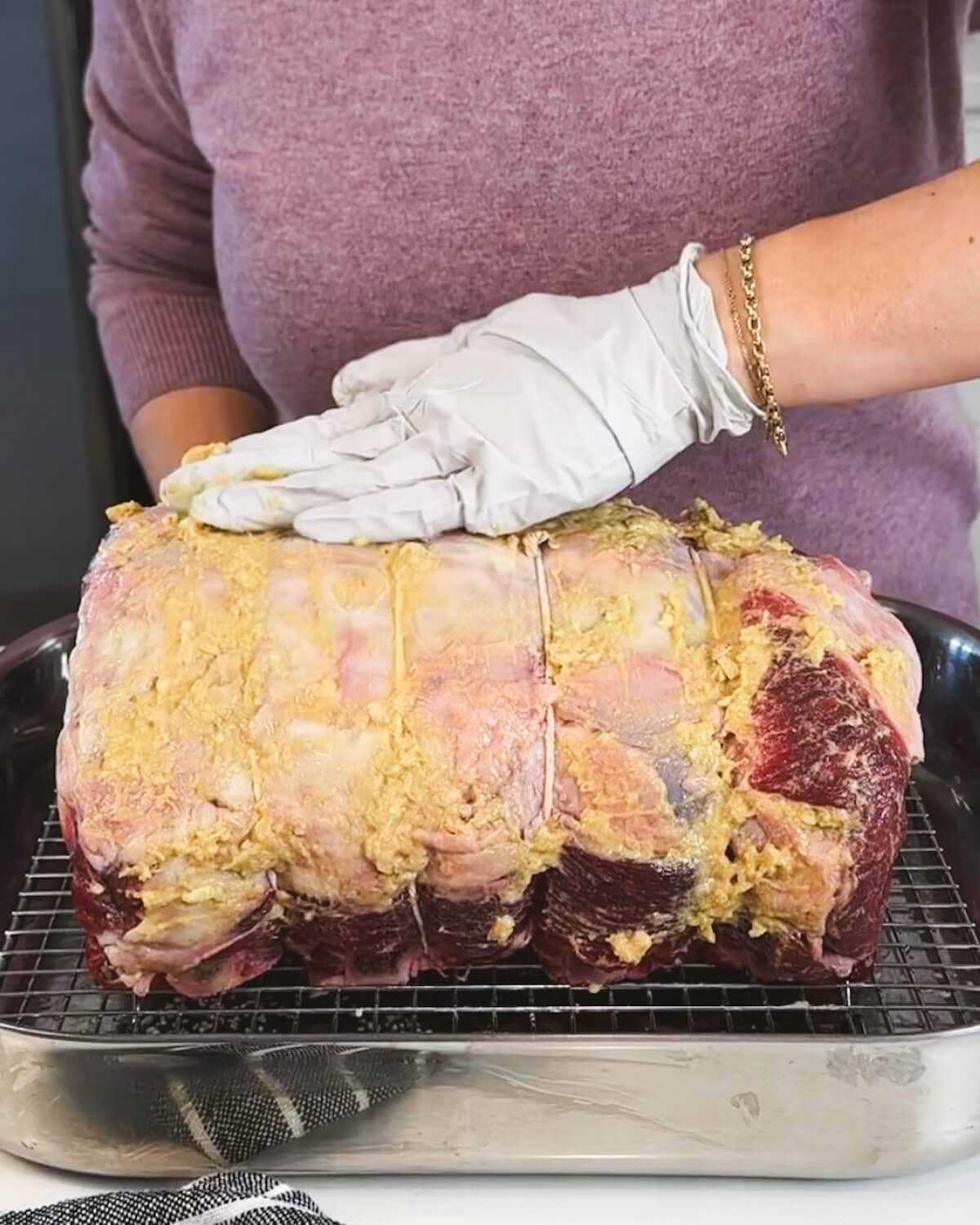
- Step 7: Heat the oven. Then, rub the roast with a mustard and garlic paste.
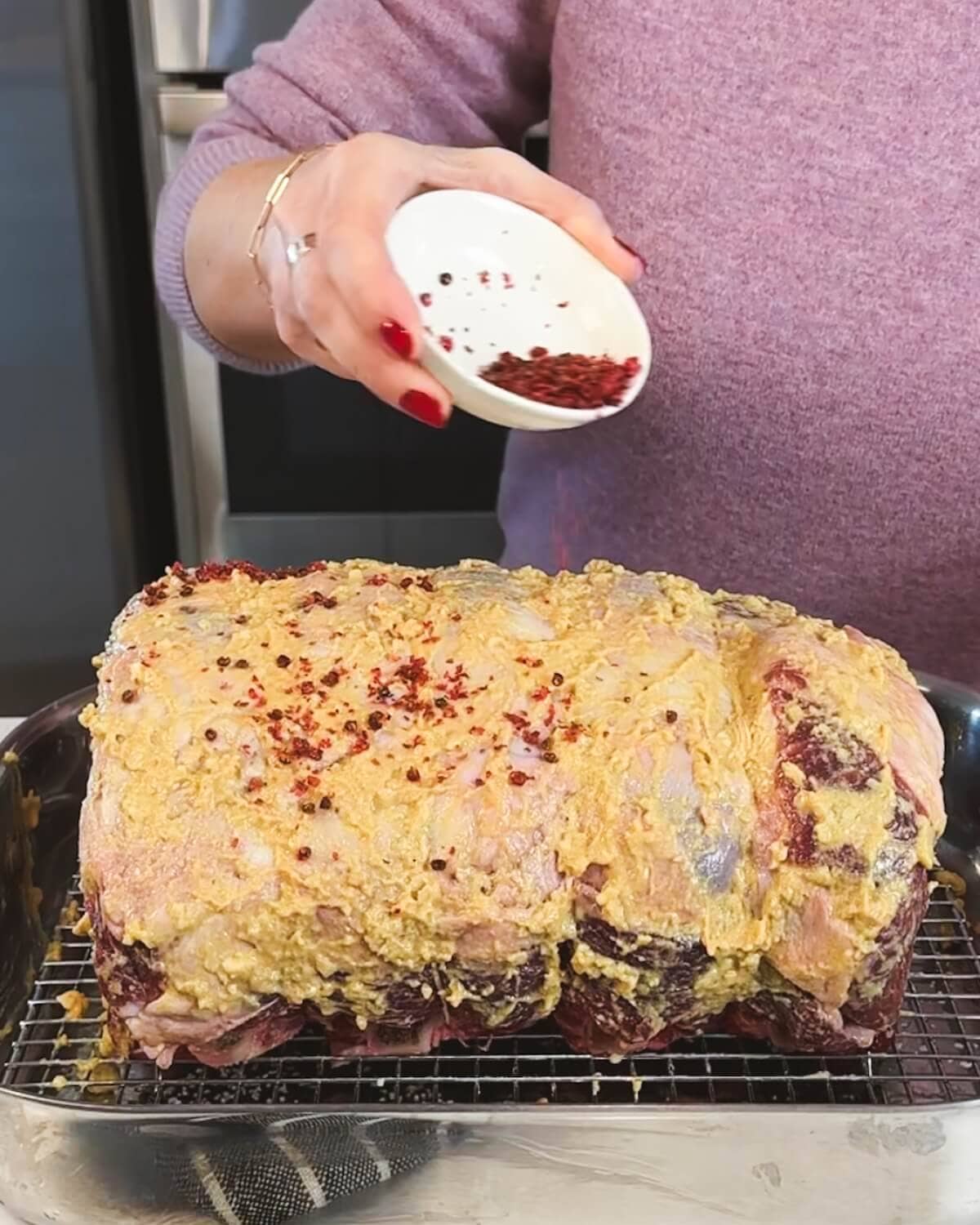
- Step 8: Sprinkle the roast with crushed pink peppercorns.
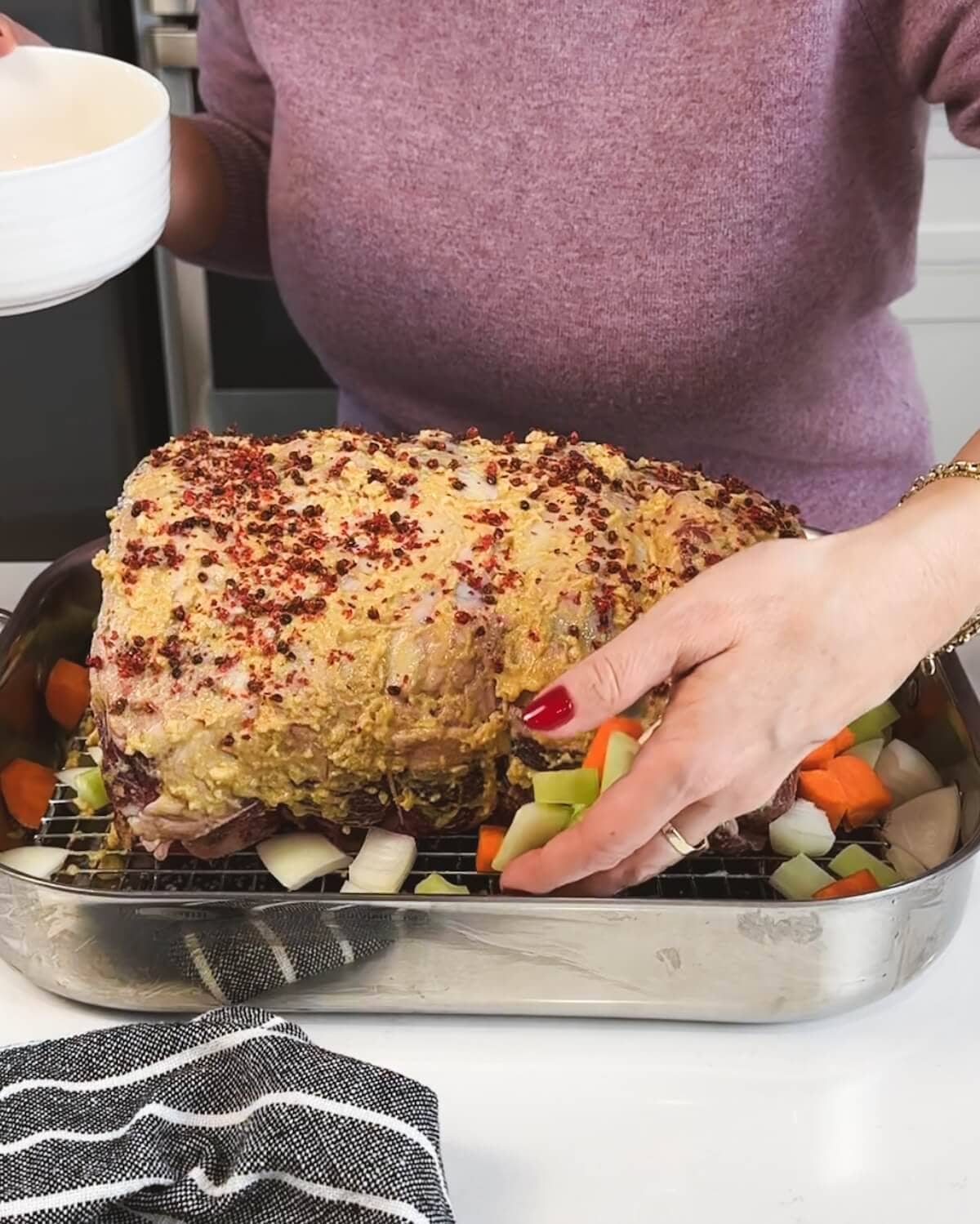
- Step 9: Add cut vegetables around the roast.
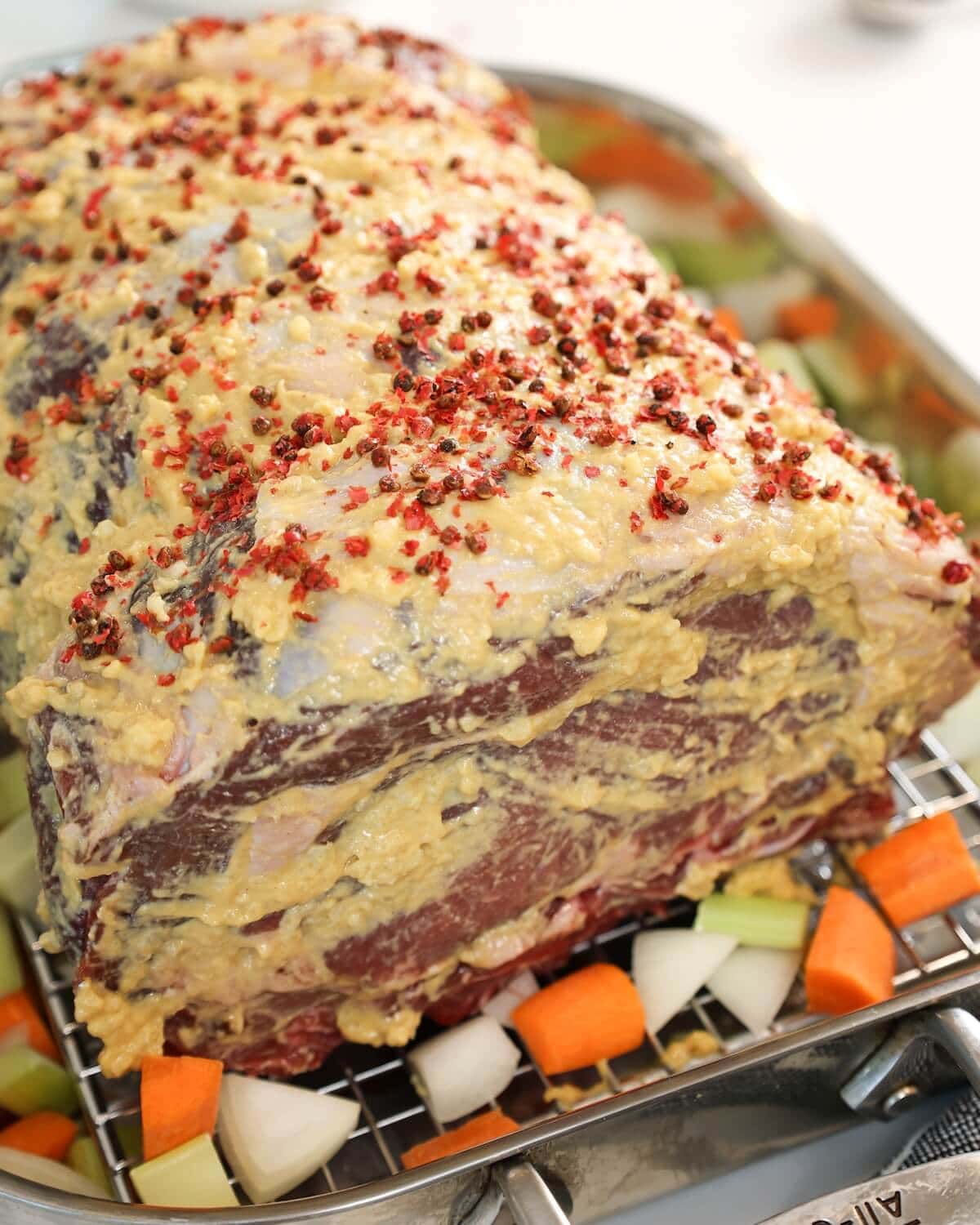
- Step 10: The roast and vegetables are ready for the oven.
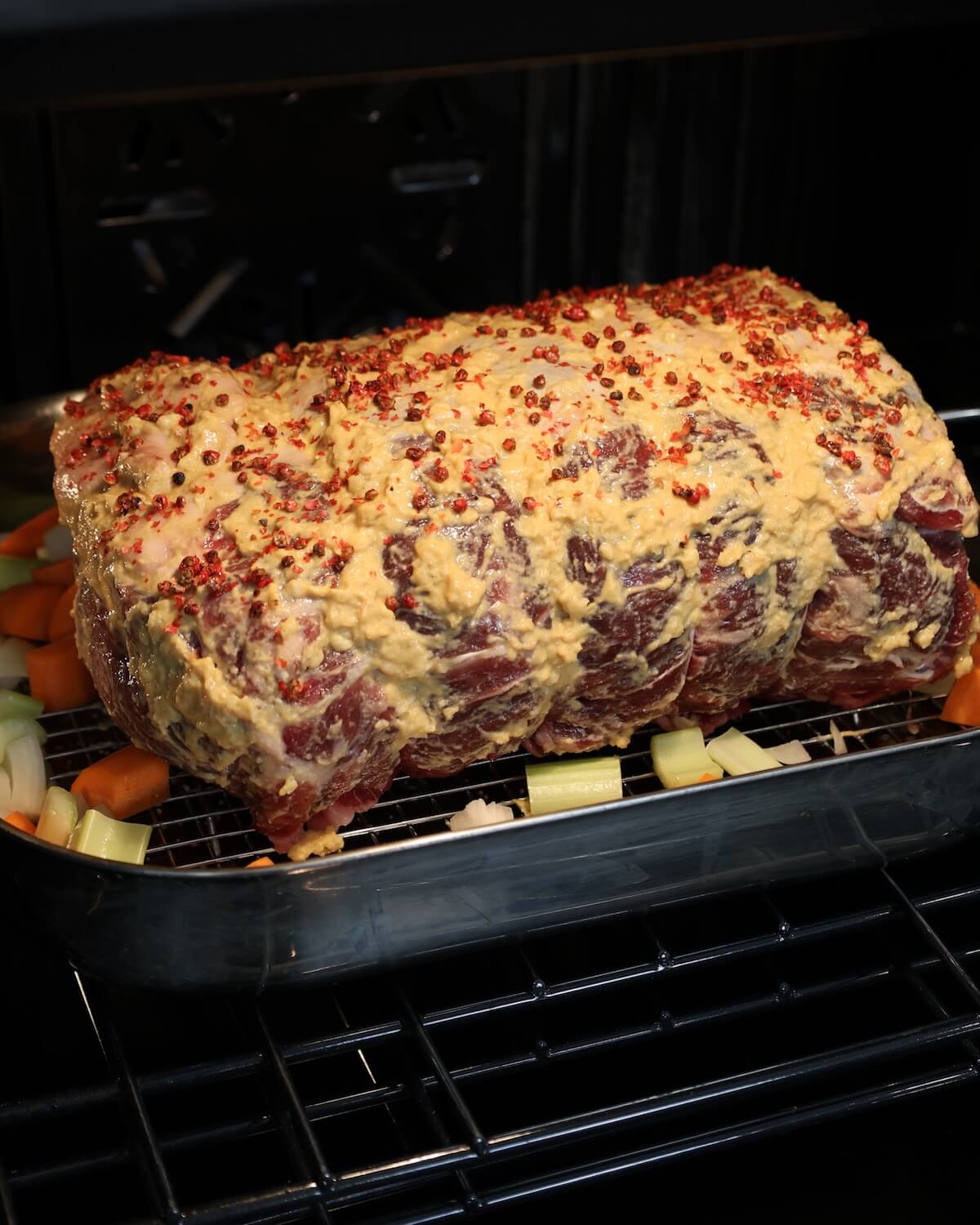
- Step 11: Roast for 20 minutes uncovered and then reduce the oven temperature.
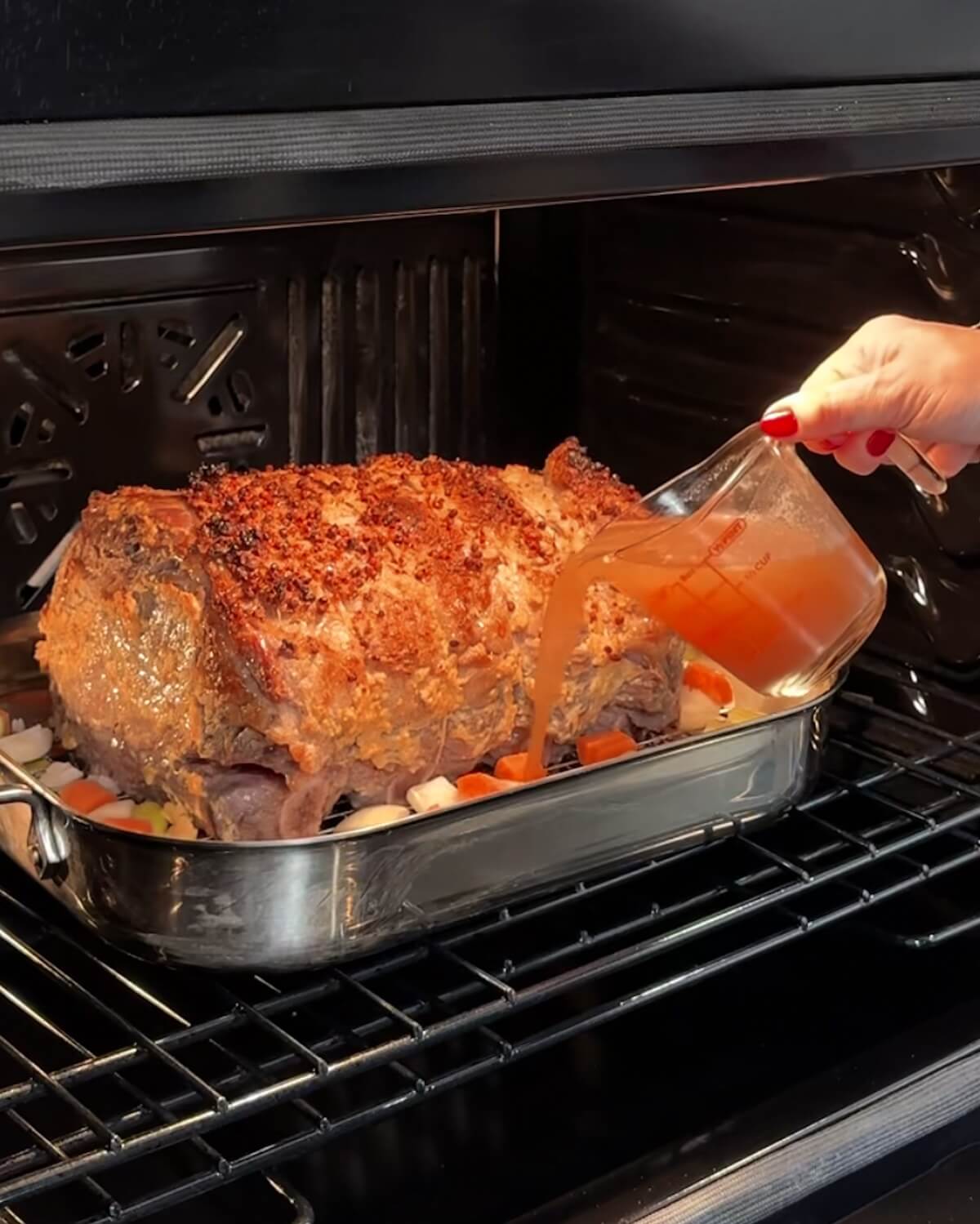
- Step 12: Add some broth to the pan to prevent scorching and tent roast with foil to continue cooking.
Temperatures to cook prime rib perfectly
Final doneness temperatures
When making the best prime rib roast recipe, you need to decide how well done you want the final roast to be. The most popular temperatures for prime rib are medium-rare followed by rare.
- Rare: 125 to 129°F (52 to 54°C)
- Medium-rare: 130 to 134°F (55 to 56°C)
- Medium: 135 to 144°F (57 to 62°C)
- Medium-well: 145 to 154°F (63 to 67°C)
- Well done: 155 to 164°F (68 to 73°C)
Pull from oven temperature
Keep in mind that a cut of this size has carry-over cooking when it's pulled from the oven. That means it will continue to cook and the temperature will rise an additional 5 to 10ºF (3 to 5°C) after it comes out of the oven. When you have a very large roast the carry-over cooking tends to be even higher, and the roast could rise up to 15°F (8°C).
To get the correct final doneness, you need to pull the roast from the oven as follows:
- Rare: 115 to 119°F (46 to 48°C)
- Medium-rare: 120 to 124°F (49 to 51°C)
- Medium: 125 to 134°F (52 to 56°C)
- Medium-well: 135 to 144°F (57 to 62°C)
- Well done: 145 to 154°F (63 to 67°C)
Example
The pull temperature for a rare roast is 115ºF (46°C). The temperature will rise to at least 125ºF (52°C), but because of its size, will likely rise to 130ºF (54.5°C), which is perfect for a medium-rare roast.
Expert tips
Salt roast early option: This is a large cut of meat and requires more seasoning. Generously salt the roast, wrap it, and refrigerate it overnight so the salt has plenty of time to work its way into the meat.
Bring to room temperature: Cooking a large roast right from the fridge will change the cooking time; you'll likely burn the outside crust and overcook the outer layer before the inside is done. To avoid this, let the roast stand at room temperature for 2 to 3 hours before cooking so that it warms almost to room temperature.
Follow cooking temperature guide: Roast at 450ºF for the first 20 minutes and then reduce the oven temperature to 325ºF to finish it at a slower pace. This insures even cooking throughout. Follow my tips for doneness and oven pull times.
Rest before carving: The roast needs to rest for 15 to 20 minutes to let the juices settle. Resting the roast is essential for juicy, perfectly done slices.
Reserve veggies and juices: Make sure to reserve the roasted vegetables and pan juices to make an au jus (pan sauce from the drippings).
How to make creamed horseradish and pan sauce
In a few easy steps make a whipped cream horseradish condiment and a flavorful au jus pan sauce to serve with prime rib. See recipe card for comprehensive directions.
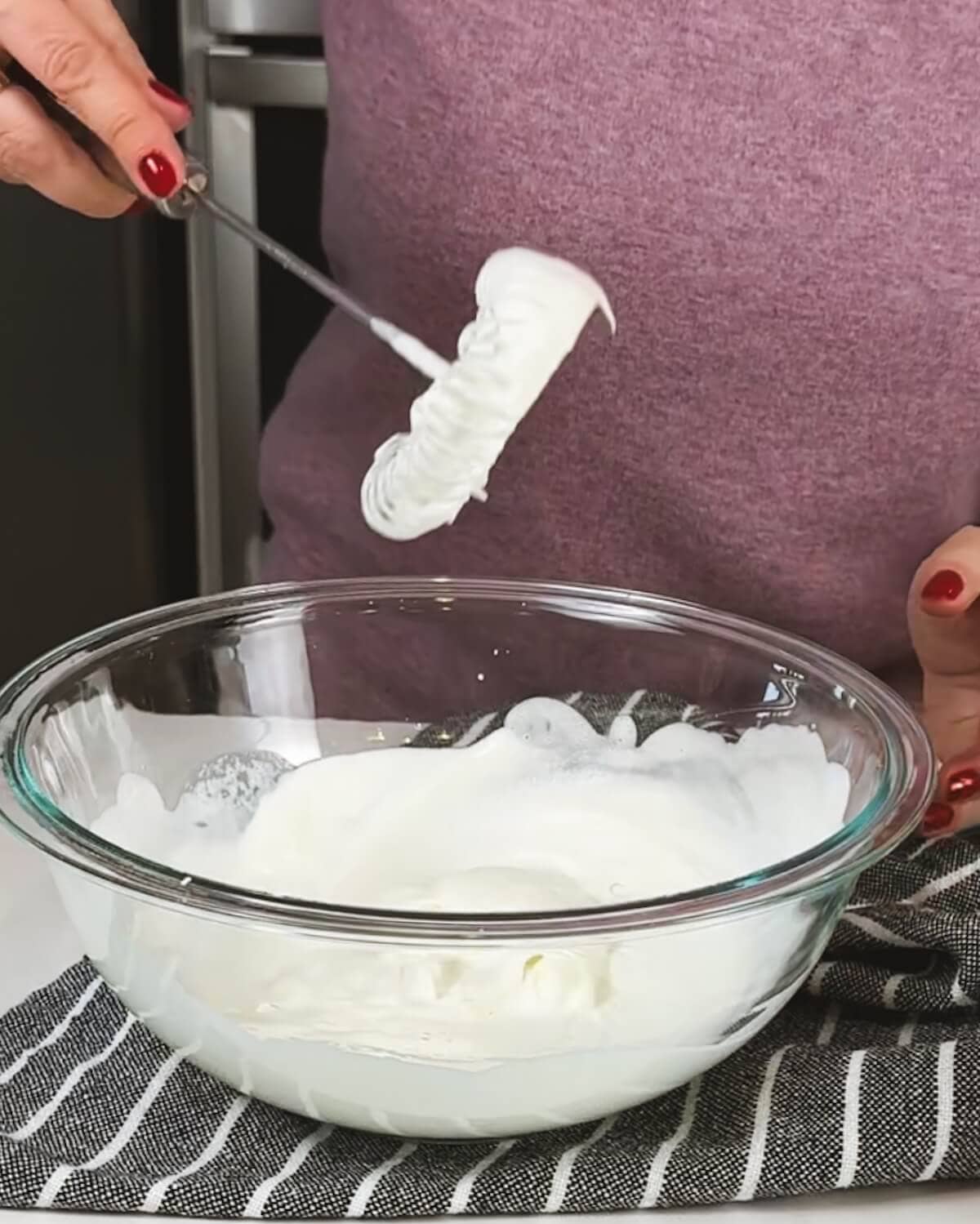
- Step 1: Whip heavy cream to thicken it for the horseradish sauce.
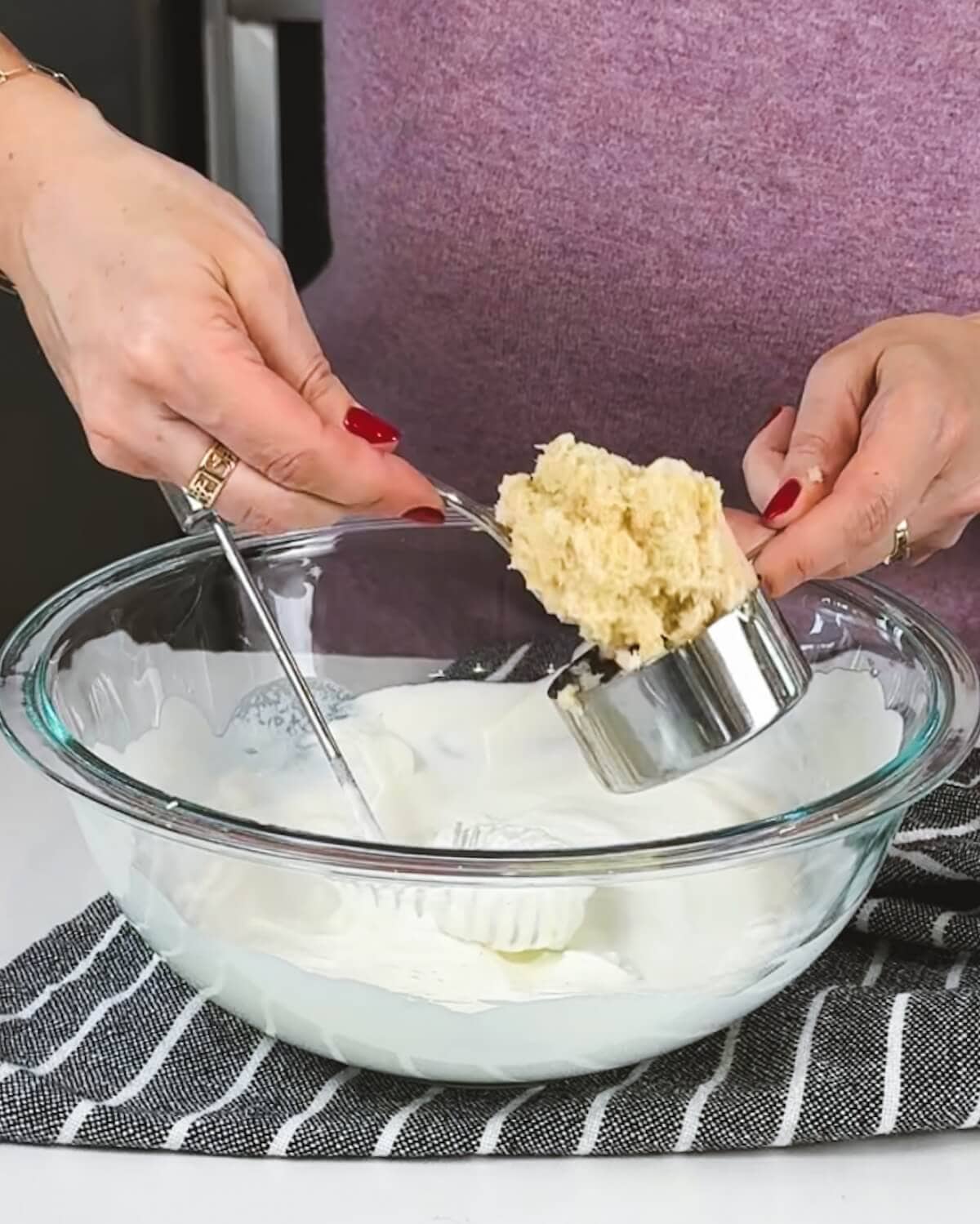
- Step 2: Stir prepared horseradish into the cream and let rest in the fridge until ready to serve.
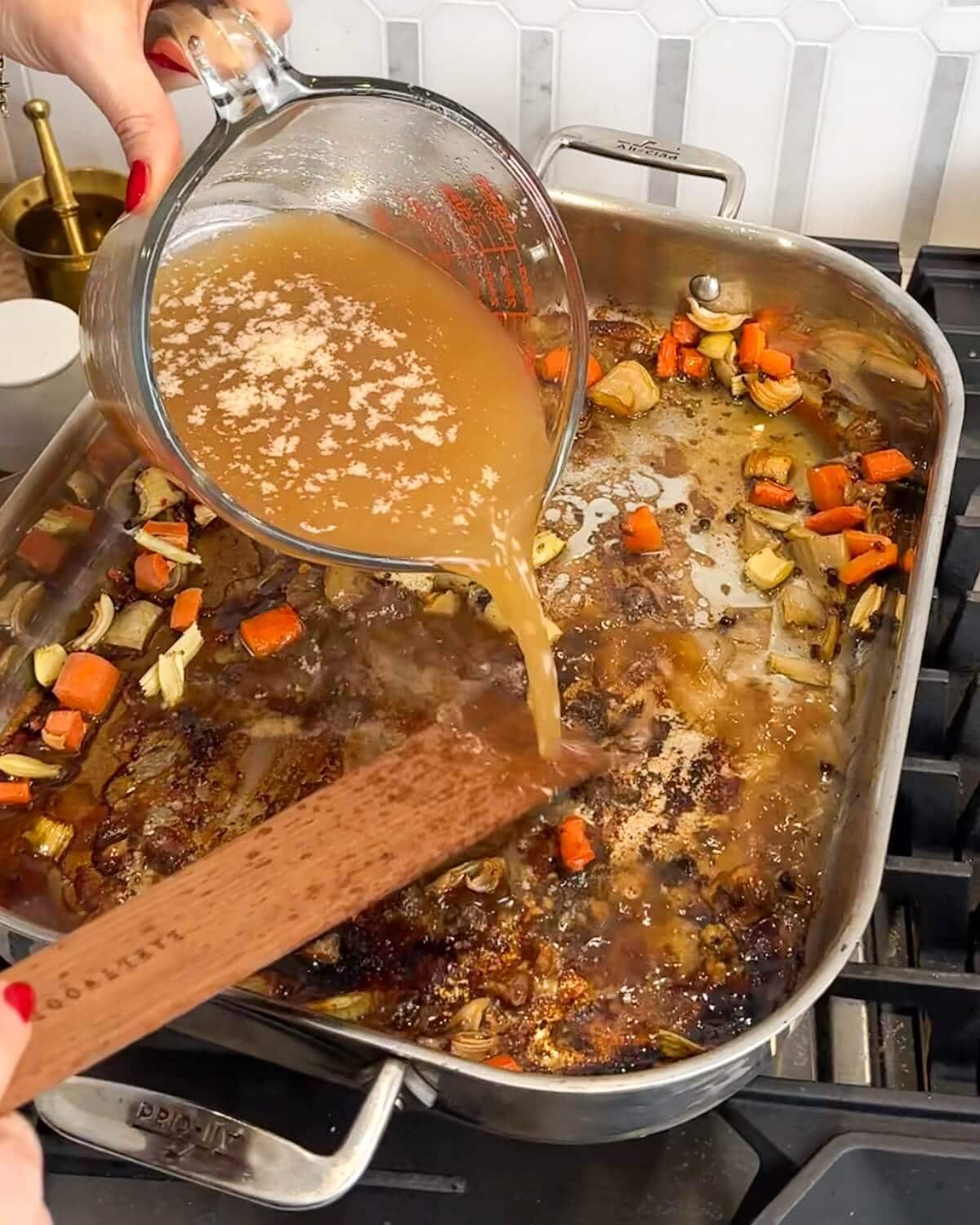
- Step 3: For the pan sauce, deglaze the roasting pan on the stove with Cognac and broth.
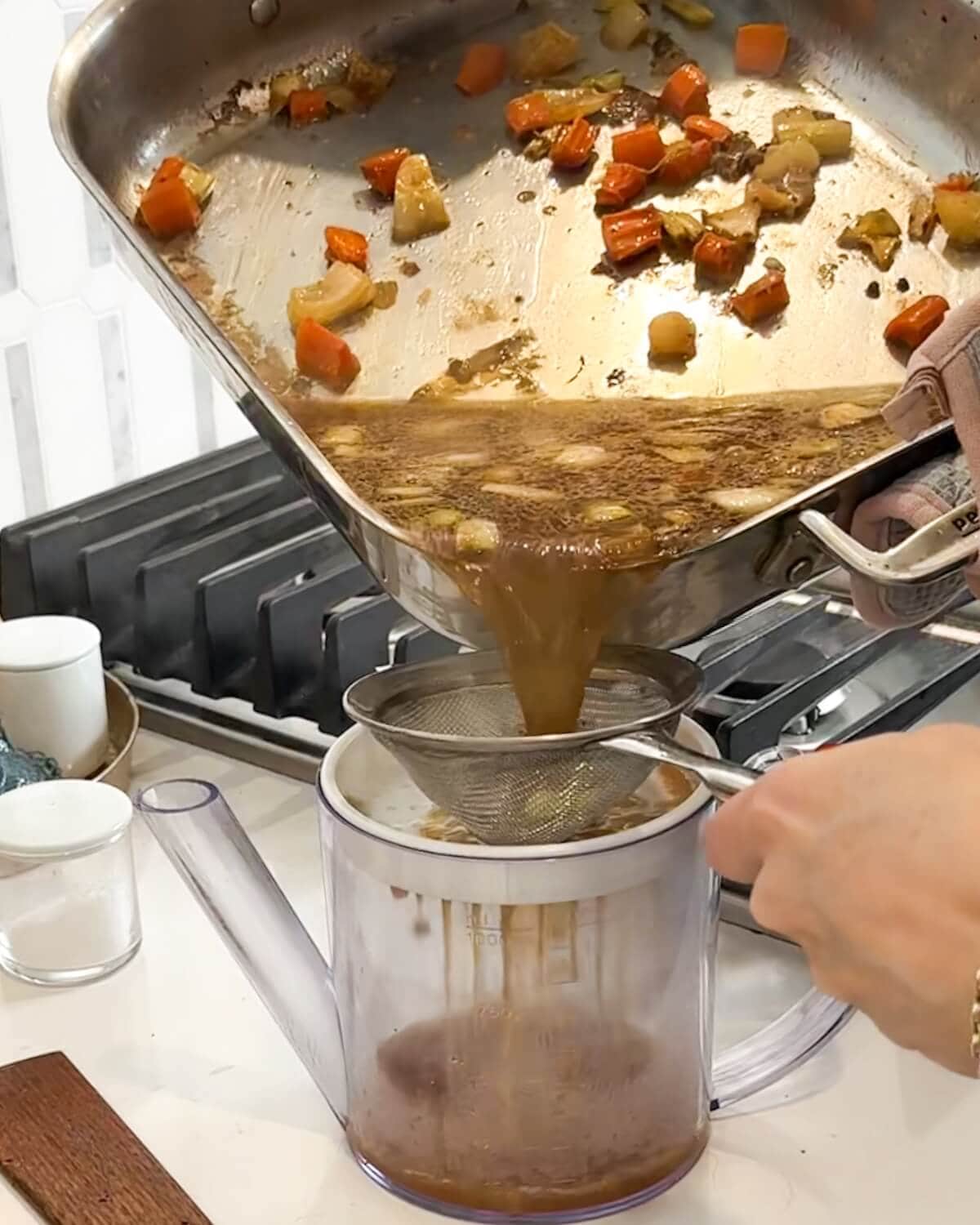
- Step 4: Thicken the pan sauce with cornstarch and then strain out the vegetables to finish the sauce.
Carving a prime rib
If you are new to carving, follow these steps
- Use a cutting board: Place roast on a cutting board with a groove around the outside to catch juices and make clean-up easier.
- Remove bones: Cut off the kitchen twine to remove the bones. (If you cooked a bone-in roast and still need to remove the bones, slice along each bone to remove it from the meat.)
- Cut against the grain: Use a carving fork to stabilize the roast with one hand and slice into the roast with a sharp carving knife against the grain to get even, tender slices.
- Don't over-carve: Slice only enough roast beef for immediate serving, since beef remains moister and juicier when left uncut.
Tip: The grain refers to the direction of the muscle fibers in the meat. Cutting against the grain means slicing perpendicular to those fibers.
Equipment
Have these kitchen tools on hand so you have all the equipment you need to successfully make a prime rib roast:
What to serve with a standing rib roast
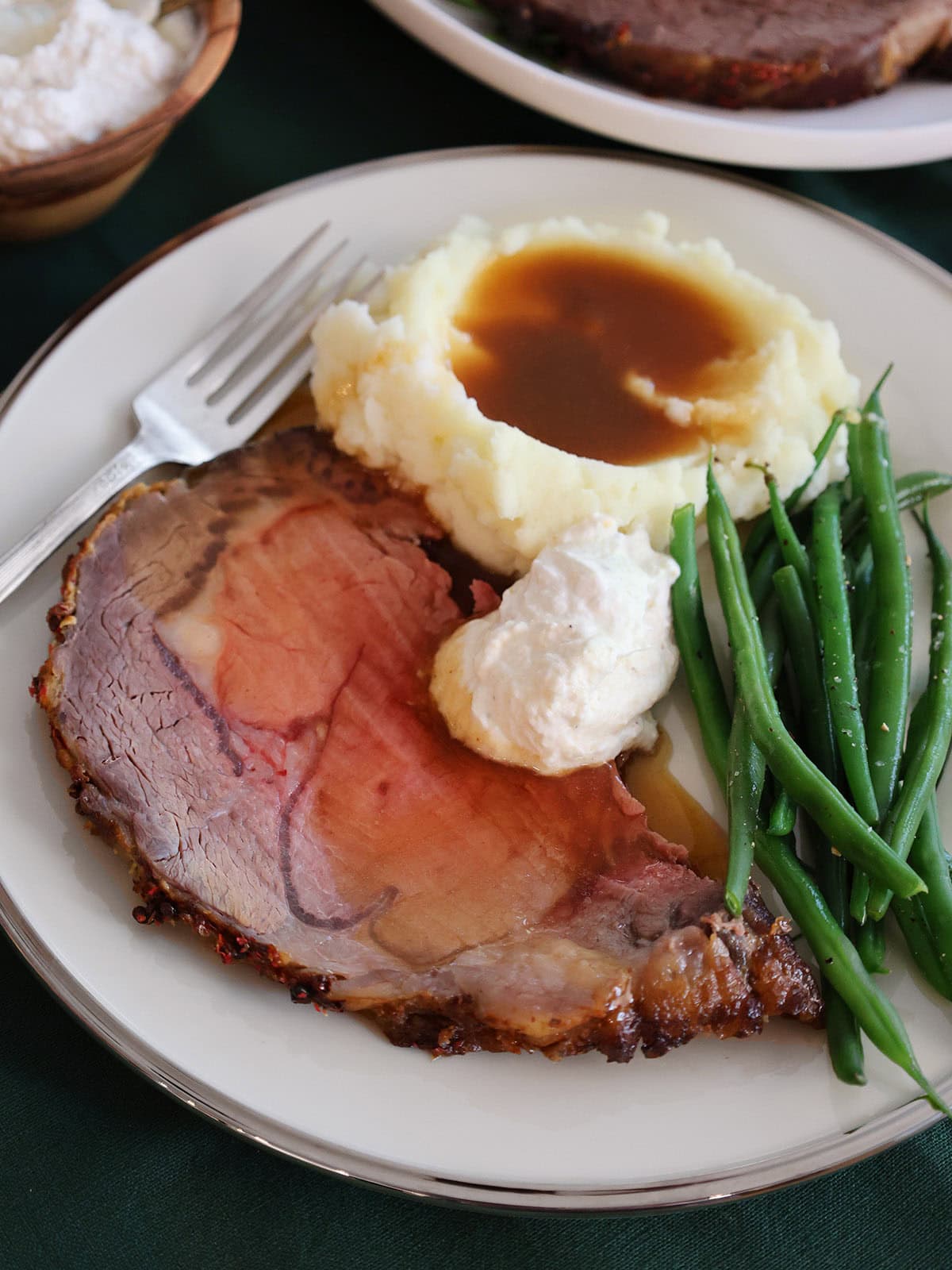
A classic main dish needs classic sides! Prime rib is often served with Yorkshire pudding, Fluffy Mashed Potatoes, roasted vegetables like Browned Butter Green Beans and Honey Glazed Carrots, and sauces like horseradish and au jus (check the recipe card for how to make these sauces).
Here's a few more of my favorite side dishes to help you plan an incredible holiday meal or Sunday supper:
Storage and leftovers
Refrigerate: Store leftover prime rib in an airtight container in the refrigerator for up to a week.
Freeze: You can also freeze leftover prime rib for up to 4 months.
Reheat: Wrap leftover roast in foil and heat in a 350ºF (177ºC) oven, or in an air fryer on low heat.
Leftover prime rib is delicious used for French dip sandwiches, breakfast hash, steak tacos, on salad, or added to chili.
FAQ
The length of time to cook prime rib depends on how rare you want the meat. After the initial 20-minute roasting at 450ºF (232ºC), the temperature gets dropped to 325ºF (111ºC), and you should plan to cook it for 11 to 12 minutes per pound for rare or 13 to 15 minutes per pound for medium-rare. Roast until an instant read thermometer inserted 2 inches into the center (without touching bone) registers 115ºF (46°C), about 2½ hours.
I don't recommend covering the meat during the initial roasting period at high heat. You want the outside to get brown and crisp. Once you lower the temperature, tent the roast loosely with foil to prevent over-cooking the outer layer.
Medium-rare is the gold standard for prime rib. At this perfect temperature, the marbling reaches its melting point. This allows the fat to render and baste from within, creates a buttery, melt-in-your-mouth texture without the meat getting tough or dry.
More impressive roast recipes
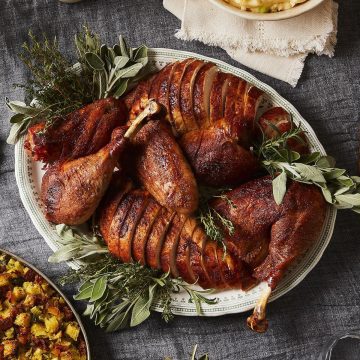
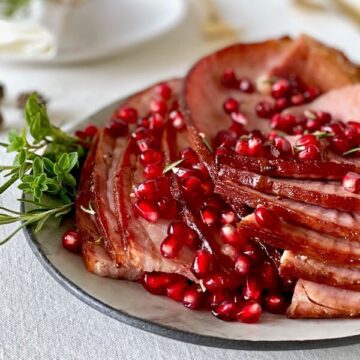
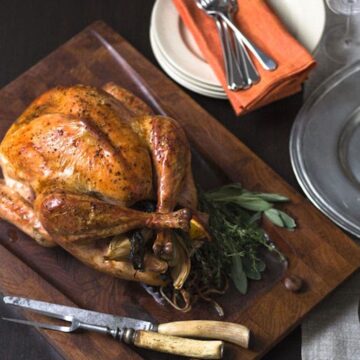
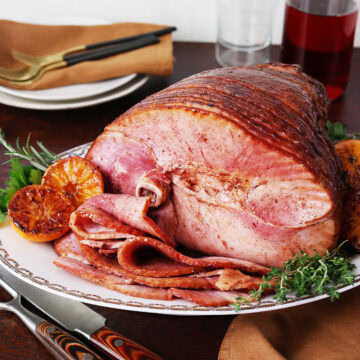
Holidays and fancy dinners are the perfect reason to make a show-stopping main dish. These no-fail classics are always a good choice:
Rate this recipe! ⭐⭐⭐⭐⭐
Scroll to the bottom of the page to rate and comment on this recipe. Leaving comments, questions, and ratings helps other too!
📖 Full Recipe
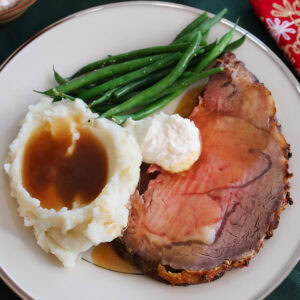
Prime Rib Recipe
Ingredients
Roast
- 1 (9-pound) beef rib roast (4 ribs, meat cut from bone, meat and bone tied together with kitchen twine)
- 2 tablespoons kosher salt
- ¼ cup Dijon mustard
- 2 tablespoons minced garlic
- 1 tablespoon whole pink peppercorns (coarsely crushed, plus more for garnish)
- 2 medium carrots (peeled and cut into small pieces)
- 1 small onion (cut into large dice)
- 1 rib celery (cut into small pieces)
- 1 cup beef broth
Creamed horseradish
- ⅓ cup heavy cream
- ⅓ cup prepared horseradish
Pan sauce
- ¼ cup cognac (or beef broth, optional)
- 2 cups beef broth
- 1 tablespoon cornstarch
Instructions
Prepare roast
- Prep roast as noted by cutting the rib/bone portion from the meat in one piece, and then tying it back together with kitchen twine. [see article above for instruction photos]. You can also have the butcher do this for you.
- Rub roast all over with the kosher salt. Wrap the roast separately in plastic wrap, or place on a wire rack in a roasting pan and wrap entire pan. Refrigerate roast overnight if desired for timing, or let roast stand at room temperature for 2 to 3 hours before roasting to come closer to room temperature.
- Heat oven to 450ºF (232ºC) and place rack in the lower third of the oven. If not already done, place roast on a wire rack or roasting rack in a roasting pan.
- Combine mustard and garlic; evenly spread over top and sides of roast and sprinkle with cracked pink peppercorns.
- Add carrots, onion, and celery to the bottom of a roasting pan. Roast 20 minutes, then reduce temperature to 325ºF (111ºC).
- Open oven and pour 1 cup beef broth into the bottom of the pan to prevent scorching, then tent roast with foil loosely, or cover darkened parts with foil as needed. Roast at 325ºF until an instant read thermometer inserted in center by 2 inches (without touching bone) registers 115ºF* (46ºC), about 2 ½ hours.
- Transfer roast to a cutting board, tent with foil and let stand 15 to 20 minutes before carving. The internal temperature will rise 10 to 15ºF (5 to 8ºC). Set roasting pan with veggies and juices to the side.
Make creamed horseradish 1 hour ahead
- About 1 hour before serving, whisk cream until thickened to soft peaks, 1 to 2 minutes. Gently fold in horseradish and a pinch of kosher salt; season with black pepper. Chill 30 minutes or up to 1 hour before serving.
Make pan sauce and serve roast
- For pan sauce, place roasting pan over stove burner(s) on medium heat. Add cognac if using, and stir to deglaze the pan. Add the beef broth and bring to a simmer scraping up any browned bits with a spoon.
- Whisk cornstarch with a few tablespoons cold water and whisk into the simmering broth. After about a minute, when the sauce has thickened, strain through a fine sieve into a serving bowl. Discard strained veggies and solids.
- Cut twine from roast, remove bone, and transfer meat to a serving platter or board; garnish with extra pink peppercorns, if desired. Slice on demand and serve creamed horseradish and pan sauce on the side.
Notes
Nutrition Per Serving
Tara Teaspoon
I’ve been in food publishing for over 25 years, creating recipes & food-styling for magazines, books, television, food brands, & advertising. With two cookbooks under my belt and thousands of my recipes at your fingertips, I hope you'll be inspired to spend more time in the kitchen!
Theresa says
Tara. Hello I love your recipes!
I'm about to take a leap and make a prime rib this year. I'm a virgin so I mistakenly bought a boneless prime rib. Does that change anything as far as the receipt? I Appreciate you! Theresa.
Tara T. says
Hi! That will be delicious. I haven’t timed mine with a boneless roast. But you’ll want to start it at a higher temperature than me. It won’t take as long to cook so a high start and then a slow roast will be great. You’ll also want a rack in your roasting pan.
Check out this other article for some tips, and then I still suggest using my peppercorn rub as it’s delicious. https://www.ourlifetastesgood.com/2018/12/boneless-prime-rib-roast.html?m=1
T a r a
Marie says
I'm not going to lie, I was a little intimidated to try roasting such a big piece of meat, but with your step by step instructions, this really was a no fail attempt at prime rib! The meat was tender, juicy, and full of flavor! Plus, the horseradish sauce? I die! Everyone loved it and I came across as a pro, which makes it even better!
Tara says
I'm so happy you liked it! It's true, not terribly difficult once you do the steps! Yay!
Mary Bench says
This sauce is dreamy!
Susan says
LOVE!! This recipe is the best and so EASY!! I made it this year for our Christmas dinner. It came out perfect and it couldn't have been any simpler to prep and make. Everyone raved about it!! This is our new holiday tradition. Delicious, Impressive and Easy!! What more could you ask for?!!
Tara says
Thanks Susan! I'm so glad you loved it! It's our family go-to as well! We'll be holiday meal twinsies!